
Population Pulse | Issue 40
- NPG
- September 24, 2026
- Population Pulse Archive
- 0 Comments
Some Decline in Illegal Immigrant Population, but not Nearly Enough
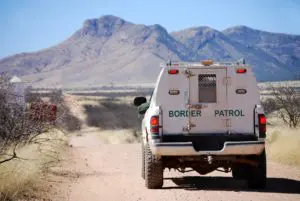
The well-respected Center for Immigration Studies (CIS), with some of the most intelligent minds working on immigration reform, publishes many valuable reports each year. They recently released a concise analysis of the current estimates of our nation’s illegal immigrant population.
After a year and a half of tumultuous immigration raids, highly publicized arrests, and heated protests in every major city across the nation, Census Bureau Data reveals that the illegal immigrant population has declined by about 2.3 million people. Authors Jason Richwine and Steven Camarota emphasize an important element of the data when they explain that illegal entry and overstay both still occur. The numbers simply reflect the fact that the total illegal immigrant population has declined.
An estimated 15.8 million illegal immigrants were living in the United States as of January 2025 when President Joe Biden left office and President Trump returned to the White House to begin his second term after a four-year hiatus.
A decline of more than two million is certainly significant – only four U.S. cities have a population of this size – but we must remember that our nation still houses more than 13 million illegals.
The authors also dispel two common misconceptions regarding the count of the illegal immigrant population:
First, some believe the number could be as high as 20 or 30 million. Richwine and Camarota explain that the children of illegal immigrants do not add to the total because those children almost always become citizens at birth. Additionally, an immigrant’s status can change due to amnesty, marriage, and visa lotteries.
Second, some in high-ranking positions within the current administration have placed the count of illegal aliens in the U.S. at more than 100 million. CIS adamantly disagrees with numbers this high, stating: “100-plus million has no basis in reality.”
The findings of CIS were recently covered in an article from The Washington Times. In that article, Camarota stated: “The numbers mark the first time in nearly a century — since the 1930s — that the U.S. has recorded a sustained net decrease in migration. In fact, the country’s overall population is likely to show an unprecedented decline.” For decades, statistics have shown that immigration is responsible for nearly all U.S. population growth. With that in mind, NPG calls for a cap on legal immigration to no more than 200,000 admissions each year and an end to illegal immigration entirely. These standards, if met, would allow our population to slowly shrink to a smaller, truly sustainable size. The recent study from CIS, using data from the Census Bureau, proves that changes in immigration numbers have profound effects on the nation’s total population count.
Additional reading:
Trump cuts migrant population by nearly 3 million: total U.S. population likely to drop
Census Bureau Survey Shows Total Foreign-Born Down 2.9 Million

Please support our mission
with a monthly contribution to NPG.
Enrollment in NPG's President's Circle program enables your monthly gift to be processed with no effort on your part. Please click here to sign up.
This program is very beneficial to NPG as it helps secure a line of funding to support our normal educational programs, including our informative Forum papers and our thought-provoking advertisements.
We have many members enrolled in this program and we constantly hear how easy it is! Monthly contributions can be as low as $8 per month, although some contribute $50 or even $100 monthly! You can manage your participation online or with a simple phone call or email to NPG.
Please consider enrolling in this special program today! As a reward, we will forward to you an exclusive President's Circle lapel pin to help show your pride in NPG's efforts to slow, halt, and eventually reverse immigration-driven population growth!
Nationwide Doctor Shortages

A recent article from the Huntsville Business Journal describes a nationwide physician shortage, particularly in smaller towns and rural areas. Author Haley Walden interviews Robert Chappell, M.D., a Designated Institutional Official for the Graduate Medical Education Program and Physician Executive Advisor at Huntsville Hospital, to gather his insights on the problem.
Dr. Chappell gets right to the point by stating: “Huntsville [faces shortages] because of extreme growth in Madison County over the last few years.” He adds: “Primary care shortage is not just a Huntsville issue; it’s a national issue, especially in rural areas.”
The National Center for Health Workforce Analysis (NCHWA) is the federal agency responsible for creating reports on the nation’s healthcare system, including issues of supply, demand, distribution, and education of those working within the medical field. NCHWA operates under the umbrella of the United States Department of Health and Human Services.
In 2026, NCHWA estimates a nationwide shortage of more than 96,000 physicians in various fields of medicine and across a wide range of geographic areas. By 2038, their estimate of shortages rises to more than 141,000.
From NPG’s perspective, doctor shortages are just another example of the serious problems our nation faces due to our obsession with growth. A large and constantly growing population will eventually affect every aspect of life. The article from Huntsville reminds us of shortages within the medical field, but the same sentiment could apply to school crowding in Dallas, the lack of housing in San Diego, and the need for green space in Chicago. While 2026 may mark a slight decrease in total U.S. population, we are already vastly overpopulated. These problems will continue to exist until we reach a smaller, truly sustainable size.
Professor Nathanial Gronewold wrote on America’s doctor and hospital shortages in an NPG Forum paper, Too Many People Chasing Too Few Healthcare Providers: How Population Growth Can Make You Sick.
To review the article in the Huntsville Business Journal, please visit this link.
Colorado River Drought Forces New Water Cuts
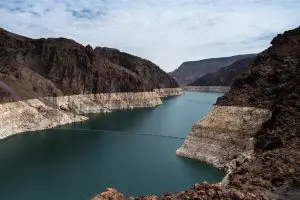
The Colorado River is under increasing strain as decades of drought, heavy water demand, and population growth collide across the American West. In August, the U.S. Bureau of Reclamation cut water allotments to Arizona, California, and Nevada after the seven Colorado River Basin states failed to agree on how to divide the river's increasingly limited supply. The reductions come as water consumption continues to exceed what the river can reliably provide.
Reuters reports that the Colorado's water problems stretch back to the original estimates used to allocate its supply. Those estimates were based on measurements taken during unusually wet years between 1905 and 1922. Since then, the river's average flow has proven considerably lower, with its average flow from 2000 through 2024 nearly 24% below the original estimate. Meanwhile, "the U.S. still draws more from the Colorado than the river provides," with consumption exceeding the river's volume in 16 of the last 24 years on record.
For years, Lake Mead and Lake Powell helped make up the difference. Reuters describes the reservoirs as "liquid bank accounts — filling in wet years and paying out when snowmelt fell short." But a drought now in its 27th year, combined with poor snowpack and continued demand, has pushed both reservoirs toward historically low levels. Some scientists believe the West may be experiencing lasting aridification, raising questions about whether the latest water cuts will be sufficient.
The Colorado River's worsening condition illustrates the challenge of supporting a growing population with a finite and increasingly uncertain water supply. As Reuters notes, "Recent population booms in the western U.S. and worsening drought conditions since 2000 have strained the supply to near crisis stage." Conservation and revised water allocations may help stretch existing supplies, but continued population growth means more people will ultimately depend on a river already struggling to meet today's demand.
To read the article, How Drought and Demand Pushed the Colorado River Toward Crisis, click here.
Global Warming Expected to Exceed 1.5°C Threshold

The world is now expected to exceed the 1.5°C global warming threshold established under the Paris Agreement, according to a new report from the United Nations Environment Programme (UNEP). Global temperatures could cross the threshold within the next few years, forcing governments to confront a new challenge: limiting how far temperatures rise above 1.5°C, how long they remain there, and whether they can eventually be brought back below that level.
The report calls this pathway “overshoot, peak and decline.” Under the most optimistic scenario, warming would peak at approximately 1.8°C above pre-industrial levels before eventually declining. But the consequences of even a temporary overshoot could be severe. UNEP warns that every additional fraction of a degree increases the risks of extreme weather, ecosystem loss, damage to human health, food and water supplies, cities, infrastructure, and economies. “This summer’s scorching heat, raging wildfires and deadly floods are a warning of what lies ahead,” said U.N. Secretary-General António Guterres. “We must make the overshoot above 1.5 degrees as small and short as possible.”
Limiting that overshoot will require immediate and sustained reductions in greenhouse gas emissions, along with adaptation to climate impacts that can no longer be avoided. NBC News reports that during the overshoot period, climate change and worsening extreme weather are expected to increase illness and deaths, reduce food production, worsen hunger and water shortages, damage economies, and contribute to species loss. As report co-author Richard Betts explained, “We have to live with this warmer world. But there’s still a lot we can do to limit warming.”
Although the report focuses on reducing emissions and adapting to a warmer planet, population growth remains an important part of the broader environmental equation. A larger global population means more people requiring food, freshwater, energy, housing, infrastructure, and other resources — all while climate change threatens many of the natural systems that provide them. Working to slow, halt, and eventually reverse population growth will not solve global warming on its own, but it can reduce the additional demands placed on resources and ecosystems as societies confront a hotter and increasingly uncertain climate.
To read the NBC article, click here.
To read the UNEP press release, click here.
Submit your articles to NPG
 Thank you for reading NPG’s Population Pulse.
Have you recently read something that is directly related to population growth that you think NPG should be talking about?
Please share it with us by emailing it to PopulationPulse@npg.org.