Calling Nature’s Bluff: The Responsibility of Affluence
- Dr. Karen I. Shragg
- September 30, 2026
- Forum Papers
- Forum Paper
- 0 Comments
Click here for a downloadable, printable PDF version.
An NPG Forum Paper
by Karen I. Shragg, Ed.D
September 2026
ABSTRACT
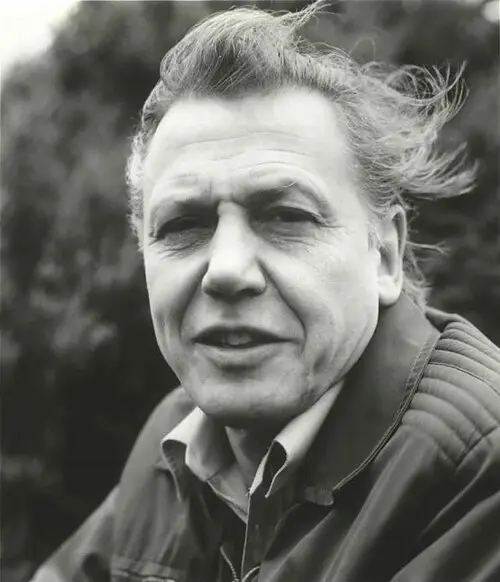
David Attenborough dedicated his career to bringing the beauty and wonder of nature to the public. In his lifetime, he shifted from focusing on the amazing nature of plants and animals of the natural world to warning us about how we must reverse our current behaviors or risk losing them with our escalating numbers and our modern ways. Of the US, he marveled at our epic ecosystems but saw that our affluence meant that we are able to destroy nature faster and contribute to a greater carbon footprint than those living in poorer countries. It is therefore our immense responsibility to keep our numbers stable and begin reducing them in order to keep room for wildlife and reduce our overall footprint.
PRESERVING OUR NATURAL WORLD BENEFITS EVERYONE
Modern living doesn’t allow for the daily encounters which would make us realize that we are all connected to the flora and fauna of the world. To preserve the natural world, ultimatelys to preserve humankind, for it is tied directly to our own salvation. Today our lives are lived largely indoors. We are more likely to experience nature on YouTube and on the BBC than we are to see it for ourselves. Inside our temperature-controlled environments, it is hard to see the value of the tiny creatures that keep other species alive and our food supply going. Sir David Attenborough made sure that we benefited from his explorations of nature’s wonders, knowing most would never see what he saw, never touch what he touched, and without a huge effort, ever appreciate what we are losing each and every day.
He often commented, “No one will protect what they don’t care about: and no one will care about what they have never experienced.” Then he set about doing just that in over 100 documentary films and 1600 film and television credits. In each of them, he took it upon himself to make us aware of the amazing natural world.
The natural world feels separate from us and therefore expendable. The very language we use to refer to it demonstrates our lack of connection to the web of life it weaves. We often say ‘the’ natural world, or ‘the’ environment, instead of using the possessive adjective ‘our’ which would show we are part of Earth’s fabric and not detached from it.
The general wealth of a country makes the detachment from nature even more pronounced because people can cushion themselves with the accoutrements of a prosperous society. They can watch movies, go out to dinner, and spend time scrolling on their devices in temperature-controlled buildings and homes. When streams go dry and trees get bulldozed, they are not there to bear witness.
On the topic of America, Attenborough had this to say: “I don’t think whole populations are villainous, but Americans are just extraordinarily unaware of all kinds of things. If you live in the middle of that vast continent, with apparently everything your heart could wish for just because you were born there, then why worry? If people lose knowledge, sympathy and understanding of the natural world, they’re going to mistreat it and will not ask their politicians to care for it.”1
A CENTURY IN THE MAKING
When Sir David was born, there were about two billion people on the planet – six billion fewer than today. The year 1926 was an auspicious one because my own beloved father was born just a few months before him, and we frequently had conversations about the negative impact of how many people had been added to the planet in his lifetime.
Population growth in the US is more damaging to wildlife than in other nations due to our high standard of living. In the same 100 years of this famous naturalist filmmaker’s life, the US population grew from 117,397,000 to nearly 350,000,000 people. No matter how or why our country’s population has increased by almost 230 million in a century, the unsustainable impact is profound. Before people jump to conclusions or solutions, it’s important to note that every person is a consumer. Each and every one represents the need to consume water, energy, and land, all of which rob these resources from the natural world. It is easy to argue that someith more disposable income take more than others, but no one is exempt from using about 82 gallons of water per day, or using wood to build housing, or polluting the environment through energy consumption by using everything from cars to home heating, air-conditioning, cooking, and cleaning.
The environmental impact of living in a developed country is huge. It is taken for granted that every home, whether rented or owned, will contain the following basics: dishwasher, multiple televisions, computers, refrigerator/freezer, overhead fans, microwave ovens, and many other modern comforts. That contributes to the sobering statistic that if everyone on Earth lived like the average American, humanity would require over 4 Earths to keep it all going. What Attenborough cautioned was that we are not only altering the aesthetics of the world, but we are also threatening our very own existence. If we continue to push the boundaries of the insects in the way of progress, we will be next in the extinction line. “Cherish the natural world, because you’re a part of it and you depend on it,” he often said. More profoundly, he quipped, “We often talk of saving the planet, but the truth is that we must do these things to save ourselves. With or without us, the wild will return.”
Once we finally grasp the unsustainable impact of each additional person on a developed country, we can start to embrace humane and reasonable policies which reflect sustainable choices rather than allow the tide to be turned against newcomers in unacceptably cruel ways.
Sir David Attenborough, a long-time resident of Richmond in the South of London, has spoken often of the dangers of an overpopulated world. He has personally witnessed how many species of plants and animals have gone extinct or are threatened with extinction due to our massive takeover of the planet. He is a prominent patron of the NGO Population Matters in England and through them he has highlighted how our growing numbers represent an existential threat to our biodiversity.
Population Matters quotes Sir David saying: “All our environmental problems become easier to solve with fewer people, and harder – and ultimately impossible – to solve with ever more people.” Those sentiments are rarely spoken in the environmental movement. If one does a deep dive into the websites of leading wildlife groups, one will be hard pressed to find any references to overpopulation. The World Wildlife Fund has a clear mission statement. It is to, “…build a future in which people live in harmony with nature.” They encourage their supporters to invest in nature and people. Nowhere on their website can you find any reference to overpopulation or population growth as key to balancing nature and people.2
The Wilderness Society focuses on American wildlife. Their website encourages the public to donate to protect “America’s irreplaceable public lands and the wildlife and communities who depend on them.” It is a noble goal and again nowhere in the text is there any indication that this is possible with a growing population of consumers now pushing 350,000,000.3
There are approximately 15,000 wildlife protection and conservation organizations in the US. Going through each of them to see what their stance is on overpopulation would be great material for a Ph.D. dissertation or a book, but the assumption is pretty clear – very few, if any of them – wish to upset their patrons with the grim reality of overpopulation’s role in preventing the success of their collective missions.
There is also a glaring absence of any reference to overpopulation in smaller local wildlife NGOs. Washington Wildlife First, for example, has a noble goal that does not explicitly include population issues – instead their website states: “We seek to transform Washington’s approach to fish and wildlife policy to a more democratic paradigm that elevates science, recognizes the intrinsic value of individual animals, and prioritizes protecting, preserving, and perpetuating wild lives and ecosystems.”
A few decades back, several of us population activists sent letters to 74 environmental NGOs in our state of Minnesota. In each, we asked them if we could help them craft a message which would educate their supporters about how the environment is impacted by overpopulation. We only got one response back. It was from a group which firmly stated that overpopulation was not in any way associated with the health of the environment. Apparently, not much has changed. I often try to imagine how much easier it would be for population groups if wildlife groups got on board with this issue.
If human impact on wildlife is mentioned, it is not as a numbers issue but as a development problem. Euphemistic words like sprawl, habitat fragmentation, habitat destruction, and urban development are used to mask ever having to look at the overall impact of population growth. In an article articulating the problems of wildlife displacement, author Chris Mitchell states: “When a subdivision replaces oak woodland or a highway cuts through a migratory route, wildlife doesn’t simply move somewhere else. Animals are compressed into smaller fragments, clustered along artificial edges, and forced into overlap with human activity in ways that all but guarantee conflict. This isn’t animals ‘moving into towns’ – its displacement driven by habitat erasure.”4
It doesn’t seem like it would take much more effort to say that the more people we have in the US, the more wildlife we displace with our developments, but it does appear to be a bridge too far.
One NGO brave enough to help their supporters see the connection is the Center for Biological Diversity. On their website – in contrast to so many others – they say: “Human population growth and overconsumption are at the root of our most pressing environmental issues, including the species extinction crisis, habitat loss and climate change. To save wildlife and wild places, we use creative media and public outreach to raise awareness about runaway human population growth and unsustainable consumption – and their close link.”5
Years ago, they actually made condoms with funny pictures and slogans on them to creatively help people make the connection between human numbers and wildlife conservation. “Please wear to save the Polar Bear,” was one of their clever ads.
A CHAMPION OF THE EARTH
The scientific community has recognized Attenborough’s contribution to focusing our collective attention on the natural history of some of the world’s most rare and amazing species by naming over 50 species in his honor. From a prehistoric marine reptile to a rare British flower, the world will remember his name for a long time.
In April of 2022, the UN Environment program (UNEP) announced that Sir David Attenborough was the recipient of the Champions of the Earth Lifetime Achievement Award. During the presentation, Inger Andersen, the UNEP Executive Director, said: “Sir David Attenborough has devoted his life to documenting the love story between humans and nature and broadcasting it to the world. If we stand a chance of averting climate and biodiversity breakdowns and cleaning up polluted ecosystems, it’s because millions of us fell in love with the planet that he showed us on television.”6
THE MESSAGE THAT CHANGED OVER THE YEARS
When Attenborough first started out in his environmental advocacy work, his general message was to show us amazing birds of paradise, wonderful family structures of elephants, and the intelligence of the octopus among countless others. He pointed the camera toward species that have never been thought of as intelligent. By getting the following great footage: clownfish that clean their anemone homes and work cooperatively to move coconut shells closer for egg-laying, bowerbirds that construct elaborate structures to attract females, and the male white spotted pufferfish which makes detailed patterns in the sandy bottom of the ocean floor to attract a mate, he was hoping to convince viewers of nature’s magnificence. As his career progressed, he began to witness the demise of the natural world connected to our dominance of the planet and shifted to messaging about a wake-up call. In fact, his later documentaries were structured to tell the world what we were doing to the natural world was both immoral and against our better interests.
Attenborough’s warnings and recommendations are founded in facts. He is not being hyperbolic, because every claim he makes in his passionate speeches about how we are hurting the planet is backed up by science. According to the University of Berkley, population growth affects the Earth systems, of which wildlife is a part. As human populations grow, demand for natural resources generally increases, contributing to greater resource extraction, freshwater use, land conversion to agriculture and urban development, pollution and waste, pressure on forests and wildlife through fishing and hunting, and the human transport of invasive species.7
A WITNESS TO THE AWESOME AND THE AWFUL
Attenborough is unique in his fearless persona and frequently expresses his unedited passion for saving the natural world. In his documentary series, Life on Earth, he said: “The fact is that no species has ever had such wholesale control over everything on Earth, living or dead, as we now have. That lays upon us, whether we like it or not, an awesome responsibility. In our hands now lies not only our own future, but that of all other living creatures with whom we share the Earth.”8
In an interview with Radio Times in 2013, he boldly claimed what many in the environmental movement have said for a long time: “We are a plague on the Earth. It’s coming home to roost over the next 50 years or so…either we limit our population growth or the natural world will do it for us.” He advocated for education and particularly for empowerment of women to address this global and local problem.
SIR DAVID ATTENBOROUGH’S CORE CAUSES
In addition to championing the fight against overpopulation, he is dedicated to the purchase and protection of critical wildlife habitats and serves as president of Butterfly Conservation. He firmly believes in rewilding landscapes in order to restore collapsed ecosystems and he focuses his efforts there when he isn’t producing one of his award-winning films. He has spent the greater part of his life and career calling for immediate action against climate change and a reduction in fossil fuel usage and switching to renewable energy. He even focused on saving his beloved Mountain Gorillas. All of these downstream issues get media coverage. Most people love to contribute to supporting wildlife directly: indirect support of wildlife is not as popular even though it is the underlying cause of so much wildlife decline. There are 29,000 environmental and conservation groups including 3,000 land conservation groups. Contrast that level of engagement, which includes heavy hitters like the Nature Conservancy, with the 10-15 NGOs and think tanks that are primarily dedicated to campaigning about the negative effects of population growth and one can see the uphill battle that these population groups face. Among the dozen or so that address overpopulation, only a few of the groups address the way in which immigration adds to a country’s growth. Few wish to tackle this politically sensitive issue or acknowledge that as natural birth rates decline and immigration continues to be used as a tool to increase population growth, these organizations face an uphill battle.
Attenborough warned about immigration in two contexts. One was the potential increase in climate refugees who will no longer be able to live in highly populated regions of Africa and island nations as those areas become increasingly uninhabitable. Their displacement could lead to social unrest and unwelcome population increases in countries that are already overpopulated. The other context is that in developed nations like the UK, where population has stabilized, the increases are driven heavily by migration. The US statistically mirrors the situation in the UK. With immigration numbers higher than the suggested 200,000 per year by NPG, the US is in danger of absorbing increases which its resources and infrastructure cannot support.
Another point Attenborough makes is that developed nations are responsible for a greater share of greenhouse gas emissions than underdeveloped countries. This impacts the effects of migration, because if one person comes from the underdeveloped world into the US their carbon footprint will be 4 to 5 times larger. According to NASA’s Jet Propulsion Laboratory, the Pacific Island nations of Tuvalu, Kiribati, and Fiji will experience at least 6 inches of sea rise in the next 30 years. This will happen with zero increases in the carbon already in the atmosphere. That means that 1,085,000 people, in today’s numbers, will be looking for higher ground. If their populations are still growing, that number will likely increase in 30 years.9
EXTINCTION NO. 6 HAS US ON THE MENU
No one is more articulate or more qualified to discuss the fact that we are in the midst of the 6th mass extinction on planet Earth than Attenborough. As our species nears 9 billion, we homo sapiens are living an ecological nightmare. In his documentary film, Extinction: The Facts, he told his audience that many critics like to point out that we are a natural part of nature’s natural evolutionary process of extinction. Then he highlights the speed at which we are causing those extinctions which is alarming. “Species have always come and gone, that’s how evolution works. But, says Sir David, the rate of extinction has been rising dramatically. It is reckoned to be now happening at 100 times the natural evolutionary rate – and is accelerating.”10
The way in which humans have altered the Earth’s biomass is profound, he states. This is best illustrated by the fact that up to 96% of mammals on the planet are now either humans or livestock, which squeezes wildlife into the remaining 4%. Humans drive habitat loss through the clearing of forests for agriculture and mining interests, overexploitation of the oceans with massive overfishing, and mass pollution consisting of the dumping of chemicals and plastics into our waterways and oceans.
The first Earth Day in 1970 successfully mobilized 20 million Americans and soon after the Environmental Protection Agency was formed. Since then, Attenborough has used Earth Day to remind the world of what is going on in the environment. Imagine how bad things might be without that activism. Even with our raised awareness, right now, humans are consuming 1 million species out of existence. In the last 56 years, birds, mammals, reptiles, fish, and amphibians have declined by 60%. Attenborough has been careful not to only focus on the larger more beautiful animals, for he knows how important keeping our pollinating insects and the bottom of the food chain is for life on Earth.
FROM DESPAIR TO HOPE
Attenborough, a beloved naturalist, also points out that the path forward is not inevitable, if only the collective will of the people, of governments and multi-national corporations were to shift their narrative from wanting to line their portfolios to rewilding the planet. We are the meteor of this extinction. Stabilizing the climate through well managed transitions to renewable energy, not wasting 40% of our food production and the establishment of protective areas could go a long way to help stave off this latest mass extinction which, he warns, is likely to include us.
Sir David’s most memorable recollection, of all of his special wildlife encounters, was with the mountain gorillas of Rwanda. One of the babies tried to take off his shoe. There were 250 of these amazing creatures living there when Sir David visited in the 1970s, now there are more than 1,000. It shows, says Sir David, what we can achieve when we put our minds to it. “I may not be here to see it,” he concludes, “but if we make the right decisions at this critical moment, we can safeguard our planet’s ecosystems, its extraordinary biodiversity and all its inhabitants.”11
A CHANGE IN PRIORITIES
Right now, the climate numbers look grim. Currently there are over 420 parts per million (ppm) of carbon dioxide in the atmosphere, meaning for every million molecules of dry air, more than 420re carbon dioxide. Before the Industrial Revolution, this level was stable at around 280 ppm. This increase in the atmospheric carbon dioxide, measured in ppm, is largely driven by the burning of fossil fuels, which typically increases as populations grow and as people migrate to countries with higher rates of consumption. It is also tied to the way we practice modern agriculture which destroys the ancient ability of soil to hold on to carbon. Carbon in the soil presents no harm. Once it is released it becomes carbon dioxide, one of the main greenhouse gases. The more people from the less industrialized world migrate to nations with more industrialization, the more carbon dioxide increases in the atmosphere. This is important because these become a part of greenhouse gases. They are called this because, as in a greenhouse, they trap heat in the atmosphere raising global temperatures. This, in turn, increases ocean temperatures which kills off ocean life and increases the number of fierce storms. It affects our ability to raise food, because crops need steady rainfall and global warming means more droughts and more severe storms. If we were to devote all of our energy, time and money to trying to solve this life-altering trend, solutions may still be out of reach, but the way we are currently spending our tax dollars, one could conclude that we have already given up on planet Earth.
The US has between $1.1 and $1.5 billion dollars in its annual NASA budget, dedicated to space travel to Mars. The Mars Exploration Rover mission alone costs $1.08 billion.12 Other countries combined spend another $1.5 -2.5 billion annually investing in a planet that would take nearly 300 days to get to with today’s technologies. Japan has a program devoted to growing trees which can live on Mars, with its dust storms, on its cold, dry and atmosphere-less surface, with 62% weaker gravity.
When Attenborough was asked what he thought of the scientific community devoting so much time and effort into going to Mars, his response was profound: “Will there be hummingbirds there?” In one short sentence he revealed that his primary focus is in preserving the magic and mysteries of the natural world right here, on the third planet from the Sun. Imagine what that kind of local and global budget, currently being used for space travel to Mars, could do to help the dire situation here on our planet that already has an atmosphere, soil and thousands of species that need saving. Those billions of dollars could be directed to helping each country achieve a sustainable population, manage climate refugees in a humane way, and hire wildlife staff to monitor and conserve areas designed to protect our most endangered species. We could devote our scientific minds to carbon capture technology, renewable energies, restorative agriculture, and cleaning our water supplies.
The Endangered Species Act, now under attack, proved to be very successful in helping wildlife. The bald eagle made a remarkable recovery after scientists identified DDT as a major cause of its decline and the pesticide was subsequently banned for most uses in the United States. We still have useful tools in our toolbox, but many priorities will have to change.
We will primarily have to stop treating the Earth like it is limitless. We will have to start bragging about how little resources we use instead of how much we accumulate. We have to shame those who wish to keep us in denial of all that is happening to our life-giving planet. Consumption in the US – as far as overall spending and the buying of disposable goods – has increased greatly over the years. This adds to our carbon footprint, our pollution, and the conversion of wildlife habitats into landfills. For example, the US has the highest carbon footprint when it comes to fashion, purchasing an average of 53 clothing items per person, per year. If our priorities were to change to shopping at garage sales and thrift stores and utilizing clothing swaps, then we would see fewer items going into landfills and reductions in the use of fossil fuels.
The U.S. and global economies are built on a growth model. Growth on a finite planet is a philosophy destined to fail. This may be one of the hardesto change but it is still possible especially with steady-state economic advocates like CASSE (The Center for the Advancement of the Steady State Economy).
Our anthropocentrism needs to take a back seat when it comes to valuing and understanding how the Earth works. The main monotheistic religions of the world are people-focused. They teach us to look out for our fellow humans with little regard for the biosphere and biodiversity. These religions are pretty pronatalist, taking their cues from a world that had only millionsnstead of billions, back when they first took hold. Learning from the many indigenous communities about how to sustainably live within the parameters of a particular biome is an important step to a more sustainable future.
Exorbitant military budgets and warfare are more difficult to change. The first major war between humans happened 4,725 years ago when the Sumerian king led soldiers to fight against the Elamites over the resources they wanted. Since 2700 BCE, not much has changed in that department. Our own country has declared war officially 11 times but been to war 36 times in its 250 years of existence. The United States has been at war on some level for 90% of its 250-year history. The last budget that was passed to fund the military in the US was $1.15 trillion dollars. The US spends more on its armed forces than the next 6-10 countries combined. Hidden in those numbers is the climate cost of all of those jets, tanks and ships. Annually, the US Department of Defense burns about 100 million barrels of fuel. That is 4.6 billion gallons, which is massive when compared to the fact that it is more than what 100 individual countries use per year.
Imagine if the US spent as much as China on its military which is roughly $471 billion in US dollars. That would be a savings of $679 billion dollars. That could save a lot of carbon and fund a lot of conservation projects, environmental school programs, and Planned Parenthood-based women’s education programs, not to mention health care and housing.
REWILDING OUR CONSCIOUSNESS
To begin to shift our priorities, we need a total global overhaul of attitude and perspective. It is not all about money: clean air, healthy water, and viable soil should be more important than stockpiles of money. We need to completely change our narrative and embrace the value of biodiversity. We must be unafraid to heed the words of one of Attenborough’s admirers, Professor Al Bartlett, who wisely said: “People who suggest sustainability is possible without stopping population growth are misleading themselves and others.”
The popularity of saying one loves nature is trending. What is not trending is the kind of deep change that needs to be made by the developed world in its extraction of resources and by the underdeveloped world in the way its population is still growing by huge numbers. Candidates promising that they will champion the environment without advocating to scale down our population and consistent growth-oriented development are making false promises. They do this because they know those messages would be unpopular. It is up to voters to understand at a deeper level what it means to care about the environment. It means not giving polluters permission to pollute and sell us polluting products. It means doing something very difficult – to live our lives much like the animals featured in Attenborough’s many documentaries. We have to live within the limits of our various environments. Finding the solutions is not the problem. There is much exciting research going on about restoring carbon to our soil to reduce carbon dioxide in the atmosphere. There are professionals dedicated to rewilding our lands with wildlife corridors and others who are rebuilding our climate damaged coral reefs. Many are working to bring about smaller family sizes and others to restrict immigration from a sustainability standpoint. Unfortunately, these efforts need to be more massive in scale and supported by a drastic cut in the billionaire-class corporate political power greatly increase the way we educate about how the Earth works.
Author David C. Korten warned about the power of corporations and the destruction they would bring to our world back in 1995. That was when the US had 83 million fewer people and 860 fewer billionaires made wealthy by the corporate takeover of our country’s laws. His book, published by Kumarian Press and Berrett-Koehler, is called, When Corporations Rule the World and he prophetically said: “Our future depends on replacing a life-destroying capitalist suicide economy with a living economy devoted to life’s service. The need is urgent and imperative. The time to debate whether it is necessary or even possible has long passed. We must turn what seems politically impossible into the politically unstoppable. And we must do it in a blink of history’s eye.” That urgency has increased along with our population size, including the number of ultra-wealthy people in the world.
I suggest we collectively require those with access to a computer or cable television to watch one of Sir David’s documentaries every week. This assignment is especially important for those populating corporate boardrooms and those who can afford to buy yachts, limousines, and private jets. We need to fill our congressional halls with monitors programmed to air a new Attenborough documentary each week before going into session. Viewing these moving films could help us inspire a desperately needed new direction.
A MANTEL FULL OF AWARDS
In addition to being knighted by the Queen of England (1985) and receiving the Knight Grand Cross of the Order of St. Michael and St. George by the then-Prince Charles (2022), Sir David Attenborough has won countless awards. Included among them is the prestigious 2024 Stephen Hawking Medal for Science Communication. He is the most decorated natural history broadcaster ever to grace the screen. He is the only person ever to have won eight BAFTA (British Academy of Film and Television Arts) awards in both black-and-white and color formats.
In honor of Sir David’s 100th birthday, actor and climate activist Leonardo DiCaprio said: “For as long as I can remember, Sir David has opened windows into the natural world, bringing moments of wonder, beauty, and discovery into homes across the globe and inspiring generations to fall in love with life on Earth.” He added: “At 100 years old, his legacy is extraordinary. He has reshaped global awareness of conservation and reminded us, time and again, that protecting nature is not optional — it is fundamental to our future… Thank you, Sir David, for a lifetime dedicated to protecting our planet.”13
I am willing to bet all the marine iguanas in the Galapagos, and all the Bower birds of Papua New Guinea, that he would give back his awards and accolades if the world would begin to really listen to him. Our best birthday gift to the world’s most popular naturalist/filmmaker would be to stop destroying the lives of so many species, including ours, on this once beautiful and life-giving planet.
Notes:
- https://www.goodreads.com/author/quotes/106444.David_Attenborough
- https://www.worldwildlife.org/
- https://www.wilderness.org/
- https://landwildlifereport.com/2026/01/16/urban-sprawl-wildlife-displacement/
- https://www.biologicaldiversity.org/programs/population_and_sustainability/index_old.html
- https://www.unep.org/news-and-stories/press-release/david-attenborough-receives-uns-most-distinguished-environment-award
- https://ugc.berkeley.edu/background-content/population-growth/
- https://earth.org/david-attenborough-quotes/
- https://www.jpl.nasa.gov/news/nasa-analysis-shows-irreversible-sea-level-rise-for-pacific-islands/
- https://www.bbc.com/news/science-environment-54118769
- https://www.thejakartapost.com/life/2020/09/12/attenborough-in-warning-to-humanity-with-new-extinction-documentary
- https://www.planetary.org/space-policy/cost-of-the-mars-exploration-rovers
- https://deadline.com/2026/05/leonardo-dicaprio-david-attenborough-tribute-100th-birthday-1236888075/








Dr. Karen I. Shragg is an overpopulation activist, speaker, and author of the new book Move Upstream: A Call to Solve Overpopulation (Free Thought House Press, 2015). A naturalist and director of Wood Lake Nature Center in Richfield, Minnesota, Dr. Shragg is also the author of many other titles including the Nature’s Yucky children’s book series.