
Population Pulse | Issue 37
- NPG
- August 13, 2026
- Population Pulse Archive
- 0 Comments
Immigration Is Down, but Not Enough

A recent article from Visual Capitalist concisely outlines the true demographic impact of immigration in the twelve-month period ending on July 1, 2026. Not surprisingly, and in light of stricter enforcement of immigration laws under the Trump administration, net international migration was down dramatically, falling from 2.7 million counted for the period ending on July 1, 2025, to less than half of that (1.3 million) for the period ending on July 1, 2026. This is certainly encouraging news – and it proves that reducing immigration is possible.
Most new arrivals settled in just a few states, with almost half (48%) arriving in one of five states (Florida, Texas, California, New York, and New Jersey.) Some wrongly believe that this is only a problem for more populated states with large cities like Miami, Houston, and Los Angeles, but once in the nation, new arrivals are free to move about like anyone else. In recent decades, and particularly during the COVID era, our nation experienced significant shifts in population from major urban centers to more rural states like Colorado and Oregon. Also worth noting, every state and the District of Columbia saw a net gain of new immigrant arrivals during the period ending on July 1, 2026. While smaller states may not feel as much of an impact due to new immigration right now, that scenario will likely change soon as new arrivals spread across the country and into more typical American neighborhoods.
Despite a measurable reduction in immigration numbers, the total is still far too high. With an estimated 1.3 million immigrants added to the U.S. population in just one year, our nation has serious work to do to bring immigration to an annual limit of no more than 200,000. NPG’s core objective is to reach a smaller, truly sustainable, U.S. population. To accomplish this goal, we must encourage reductions in both fertility and immigration. Americans have responded favorably on the matter of fertility. We must continue our work to bring total immigration down and instill policies to keep it there permanently.
The Visual Capitalist article can be viewed here.
NPG’s objectives on both immigration and fertility can be reviewed in our Proposed National Population Policy.
America’s Kids Are Heading Back to School

As summer quickly winds to a close, more than fifty million of our nation’s youngest are preparing for a new school year. A new report from the U.S. Census Bureau reveals that an estimated 54.4 million students, from as young as three to rising high school seniors, will soon be back in the classroom.
Providing quality education to all American children is vitally important to ensure a thriving nation for the next generations. With such a large number of students enrolled, however, we must question if the system is overwhelmed and if it will be able to maintain itself in the future. Recent population estimates indicate that our growth rate has slowed dramatically and that most couples are having fewer children. At the same time, immigration has decreased significantly. Will both trends continue over the coming decades? Time will tell. NPG welcomes both reductions in total fertility rates and decreases in immigration. Perhaps we are beginning to set ourselves on a course of true sustainability, but we must see these patterns continue for several generations to see marked results. The future of our nation’s systems – including our environmental health and all public services – is overwhelmingly dependent on growth patterns over the next decades.
Veteran NPG writer Nathanial Gronewold wrote on the strains within America’s schools in a Forum paper titled Crowded Classrooms, Teacher Shortages – Demographic Changes Could Help Our Nation’s Troubled Schools, But Only If We Let Them. We encourage you to review that paper for more detailed information on the many challenges our educational system faces.
To view the Census Bureau report, please visit this link.
President Trump Takes a Revised Approach to Birthright Citizenship

On the afternoon of Thursday, August 6, 2026, President Trump issued two new Executive Orders attempting to prevent some babies born in the U.S. from receiving citizenship at birth. Both new orders focus on birth tourism – a more narrowly defined segment within the broader discussion on birthright citizenship.
The first Executive Order states that children born to “alien enemies” and those engaging in “birth tourism” would be ineligible for citizenship. Language regarding births to “alien enemies” is already included in the 14th Amendment, but this scenario is very unlikely to occur as it would require a pregnant woman to be engaged in some type of invasion of the country and to then give birth in the United States. “Birth tourism” is very real, however, and past reports have exposed hotels catering to pregnant women to help them deliver their baby in the U.S.
The second Executive Order calls for the State Department and DHS to stop pregnant tourists from entering the country “for the purpose of engaging in birth tourism.” How this would be detected or enforced remains a huge question – and one that could be incredibly problematic from day one.
From NPG’s perspective, it is very important to note that the number of babies born to pregnant women entering the U.S. to give birth (known as “birth tourism”) is very small compared to the number of illegal alien women living and working in the U.S. who have children here. For many years, NPG has supported legislation that would require at least one parent be a U.S. citizen for a newborn baby to be granted U.S. citizenship at birth. On June 30, 2026, the U.S. Supreme Court ruled that automatic birthright citizenship, as outlined within the 14th Amendment, applies to nearly all children born in the U.S. Formal legislation, passed through the normal processes within Congress, or a new Constitutional Amendment, could change and clarify who should receive these protections.
The Trump administration will surely face significant hurdles in making these new Executive Orders stick.
For more information, please review:
Trump again targets birthright citizenship after Supreme Court loss
Trump signs immigration actions to limit birthright citizenship, curb ‘birth tourism’
Colorado River Crisis Highlights Growing Conflict Between Population and Water Supply
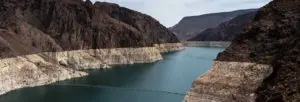
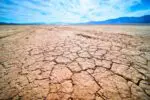
The Colorado River is entering a new era of uncertainty as federal officials work to determine how one of the Southwest’s most important water sources will be managed after current operating agreements expire this year. The Colorado River Basin provides drinking water and power to more than 40 million people, irrigates more than 5 million acres of agricultural land, and supports vital ecosystems across seven states. Communities and agricultural operations in northern Mexico also depend on the river for essential water supplies.
Unfortunately, the river system is under extraordinary strain. The Bureau of Reclamation reports that the Basin has experienced an unprecedented multi-decadal drought for the past 26 years, resulting in historically low runoff and reservoir levels. Conditions have worsened further in 2026, with the Basin likely experiencing its lowest observed snowpack on record. The combined contents of Lake Mead and Lake Powell have not been this low since before Lake Powell began filling in 1963. Federal officials have taken extraordinary steps to protect the system, including releasing additional water from upstream reservoirs and reducing releases from Lake Powell. Despite these measures and years of conservation efforts, the Department of the Interior warns that “the risk to the system has never been greater.”
With existing operating agreements expiring and Basin states, tribes, water users and other interested parties unable to reach a long-term consensus, the Department of the Interior has developed a Preferred Alternative for managing Glen Canyon and Hoover Dams. The proposal establishes an adaptive framework intended to guide operations over the next ten years while allowing negotiations to continue. Conservation will remain an important part of those efforts. In fact, federal officials estimate that previous agreements and conservation programs have left Lake Mead approximately 150 feet higher than it otherwise would have been. Still, the Draft Environmental Impact Statement identifies the larger challenge plainly: water supply and demand in the Basin are out of balance.
For NPG, the Colorado River crisis illustrates the unavoidable relationship between population size and natural resource demand. The Bureau of Reclamation itself acknowledges that “population growth and water use in the Basin also contribute to the challenge of planning for a deeply uncertain future.” More efficient water use and conservation can help stretch limited supplies, but continued population growth adds demand to a system already struggling to provide water for cities, agriculture, energy production, and the natural environment. As our population continues to grow and development continues to march forward, water scarcity will increasingly force difficult decisions about how this finite resource should be distributed.
The challenges facing the Colorado River Basin will not be solved through reservoir management alone. Drought and declining runoff are major parts of the problem, but long-term sustainability also requires recognizing the demands placed on limited natural resources by population growth. The situation unfolding across the Southwest is another reminder that human populations must ultimately exist within the limits of the environments and resources that sustain them.
To read the Bureau of Reclamation’s Draft Environmental Statement, click here.
To read the Bureau of Reclamation’s Letter to Readers, click here.
Amphibian Populations Are Declining Across the United States

Amphibians—including frogs, toads, salamanders, and newts—typically spend portions of their lives in both aquatic and terrestrial environments. They play important roles in ecosystems as predators and prey and are particularly sensitive to environmental change because they absorb water and breathe at least partly through their skin. According to the U.S. Geological Survey (USGS), amphibian populations have been declining worldwide and throughout the United States for decades. There is no single cause. Threats vary by region and include human influence and development, disease, pesticide applications, and climate change, as well as habitat destruction and pollution. Their sensitivity makes amphibian declines an important warning sign of increasing environmental stress.
In response, the Department of the Interior directed its agencies to establish a national program focused on amphibian monitoring, research, and conservation, leading the USGS to form the Amphibian Research and Monitoring Initiative (ARMI). Researchers track amphibian populations, investigate causes of declines and provide natural resource managers with information to support conservation decisions. Declines have been recorded in every region of the country, including protected national parks and wildlife refuges. USGS research estimates an average annual decline of 3.79 percent in overall amphibian populations. If that rate continues, some species could disappear from half of the habitats they currently occupy in approximately 20 years.
The decline of amphibians also illustrates a broader challenge facing wildlife as human populations grow and demands on land, water, and other natural resources increase. Expanding communities, agriculture, infrastructure, and development can alter or eliminate the wetlands, streams, and forests amphibians depend upon. Pollution, pesticide use and other human-driven pressures can further compound threats from disease and changing climatic conditions. Because amphibians rely on both aquatic and terrestrial habitats, their decline provides another measure of mounting pressure on natural ecosystems.
More than 6,000 amphibian species exist worldwide, approximately 300 of which are found in the United States. Protecting this diversity requires understanding the combination of pressures driving amphibian losses. The work of USGS and ARMI helps scientists and natural resource managers identify those causes and pursue effective conservation measures. Amphibian declines may not have a single cause or simple solution, but their continued disappearance offers an important warning about broader changes occurring throughout the ecosystems on which wildlife—and people—depend.
To read more about USGS and ARMI, click here, here, and here.