
New Hampshire State Profile
- NPG
- August 13, 2026
- State Profile Series
- 0 Comments
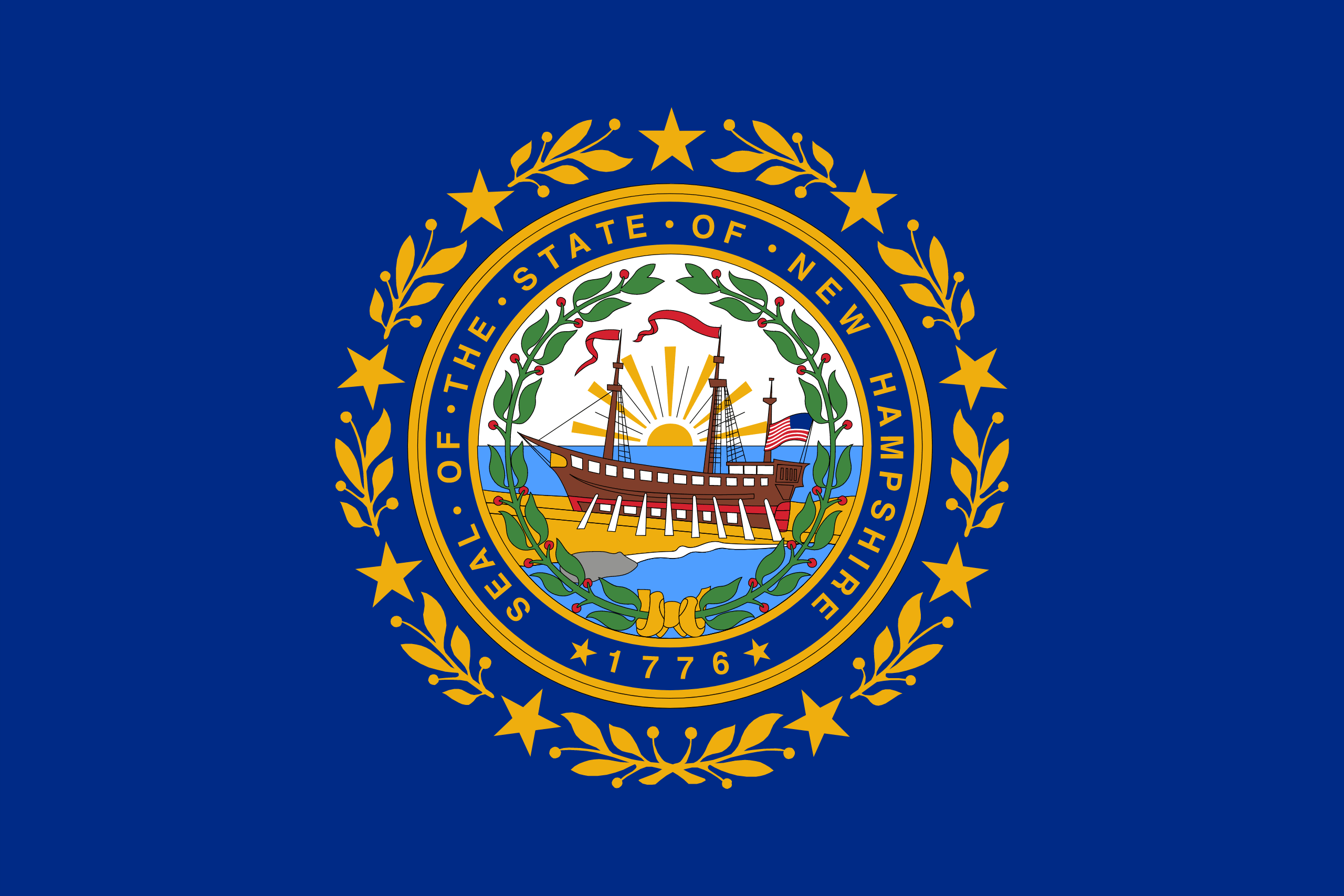
 The “new” part of this state’s name is a bit misleading, for it has been a state since 1788 when it became the 9th state to join the union. New Hampshire borders other New England region states of Vermont, Massachusetts, and Maine. “Live Free or Die” is its motto which is stamped on the license plates of its residents. This bold motto was penned in 1809 by General John Stark and adopted as the state’s emblem in 1945. Some say this slogan reflects the no-nonsense attitude of the people who call this beautiful state home.
Known as the Granite State for its many quarries and granite outcroppings, it also has mountains and seashores, forests, and quaint small towns. If you live there, you may be called a New Hampshirite or a Granite Stater. The locals are at risk for they may lose the quaintness of their communities, their mountain views, and overall quality of life. Though New Hampshirites may have bragging rights, they may want to keep quiet, because Americans who are unsatisfied with their particular living situation in other more crowded states are listening and making the choice to pack up everything and move there.
As the 7th smallest state, it occupies only 8,953 square miles which includes the White Mountains. Though it is currently the 10th least populous state (Census 2020 counted 1,377,529 residents and a population density of about 153 people per square mile), New Hampshire’s population is growing due to the state’s many qualities. As soon as a state becomes popular it attracts more residents whether its resources can support them or not. In 2026, it was named the top place in the country to move to by Consumer Affairs. This was like sending out a beacon for more growth.1
People like New Hampshire for its natural beauty and the absence of state income tax. The one thing that may keep folks away is its weather. New Hampshire is in a climate zone which makes for hot summers and cold winters. Its weather is extreme. Atop Mount Washington, New England’s tallest mountain, 231 miles per hour winds have been clocked and 47 below zero has been recorded.
THE INTERFACE OF CLIMATE CHANGE, POPULATION INCREASE, AND NEW HAMPSHIRE’S QUALITY OF LIFE
Due to its location bordering the Atlantic Ocean, climate change is impacting New England on a grander scale than elsewhere in the world. In New Hampshire, residents depend on both groundwater and surface water. Recent climate change-triggered droughts have resulted in a drop in the water table and in its lakes and rivers, requiring restrictions on water usage in recent years.2
Snowpack in the White Mountains in the northern part of the state is the key to having adequate water supplies. Snow slowly melts filling lakes, streams, and aquifers. But it hasn’t been snowing as much lately, thanks to climate change. A study from Dartmouth found that in the last 40 years, human-caused warming is shortening the amount and duration of snowfalls. In the whole of New England, many river basins are reporting a loss of 10% or more of their snowpack per decade.3
Under these circumstances, any increase in population is a fool’s game, because adding more people will contribute to even greater demands and more water shortage issues. Lack of adequate snowfalls also impacts the economy of northern New Hampshire, because for much of the winter it is in the ski resort business. Winter sports are huge revenue generators and all of that is being threatened with warming winters. Its skiing industry has generated over $500 million and provides approximately 10,000 jobs. New Hampshire is home to 20 ski resorts and areas, the largest being Bretton Woods with 464 acres dedicated to the sport. Unreliable winters and increased operational costs have already forced some small resorts to close. Others rely heavily on snow making machines.4
HISTORY, INDUSTRY, AND AGRICULTURE
As early as 1623, an English land-grant gave authority to Captain John Mason and several others to establish a fishing colony at the mouth of the Piscataqua River which became New Hampshire, named by Mason after the county in England where he spent his childhood. Prior to that, New Hampshire was named North Virginia. The settlement of New Hampshire was not formed from people who were persecuted in their homeland. It was a colonization project, as England provided the new settlement with ships and provisions.5
Prior to European settlers claiming the land, the area now known as New Hampshire had a rich history. For 11,000 years there were several prominent tribes. These included the Algonquians and the Iroquoians. The specific groups living in New Hampshire and Maine were many, including Abenaki, Penobscot, and several other smaller bands. Before colonialism, they lived in long houses and traveled seasonally between the coastal areas for fishing and the inland areas for hunting and farming. Numbering between 3,000 and 5,000, the land seemed like wilderness to the first settlers whose diseases, especially smallpox, wiped out the native tribal population by 80 to 90%. The NH cities of Nashua, Penacook, and Lake Massabesic are just some examples of indigenous names reflecting the location of former native villages.6
As European settlements expanded, the settlers lived off the land as hunters and fishermen with some subsistence agriculture. This eventually gave way to sheep farming, other crops, and increasingly larger farms. To this day, consolidation of farms is an unsustainable trend happening across the country. New Hampshire is no exception. One reason for the high price of food today can be traced to the fact that the number of farm operations in the U.S. has declined by 66 percent, and acres of farmland have declined by 27 percent. The increase of technological advancements has been largely responsible and has allowed farmers and ranchers to increase their production, opening the way to consolidation of small farms. What this means for rural New Hampshire is that there are fewer jobs in farming. This fuels the gravitation of rural residents to towns and cities contributing to the urbanization trend there and across the U.S.7
According to U.S. Federal Housing, as of 2024, there were 81.7 million people or just 24.4 percent of the U.S. population who live in defined rural areas. For comparison, 60% of the country lived in rural regions in 1900. The decrease in percentage shows how urbanized America has become, creating long and fragile supply chains. What is even more stunning is that in 1900 there were just over 76 million living in the entire country, less than those now living in rural parts of the U.S.8
This is the century of an urbanized America, which must rely on long supply chains to accommodate city life.9 A sobering 80 percent of NH’s farms make less than $25,000 in annual sales meaning that growing and selling food can no longer pay the bills.10
New Hampshire has a total of 10 counties within its borders, comprised of 13 cities, 221 towns, and 25 unincorporated places. Most people live in the southern part of the state as the north is mountainous and forested. Its economy is seasonal and it has a harsher climate with rugged terrain. The south is tied to the economic activity of the greater Boston area. For all of these reasons, 75% of its citizens live in the southern part of the state. When determining what the carrying capacity is for the state this must be considered.11
A DIRE SPOTLIGHT ON NEW HAMPSHIRE WILDLIFE
Biodiversity in the world is under threat, and New Hampshire is a part of that trend. The Atlantic cod and cliff swallows are in steep decline as well as some insect species. A cascade effect happens when insects are in decline. The consequences of the loss of this food source for birds, fish, frogs, and bats mean that these species go down in numbers as well. Habitat loss is the main threat to animals like the forest-dwelling fisher, a rare weasel, because as humans sprawl across the landscape in an effort to live in open space, developers and corporations increase the paving that happens when farmland and forests are converted to residential land. More human population growth means a continuation of the decline in wildlife.
CONCLUSION
According to ecological footprint data, “the population of the entire United States is using twice the renewable natural resources and services that can be regenerated within its borders.” Each state’s data reflects this in different ways depending on its biocapacity. The greater the resource abundance, the greater the biocapacity. For example, Alaska, Texas, and Michigan have more resource abundance, whereas smaller states or those with mostly desert landscapes have the least biocapacity like Rhode Island, Delaware, and Arizona. Like New Hampshire, they do not have much in the way of biological productivity, translated to forests, soil, or water supplies to divide between its citizens.13
In a report from the New Hampshire Fiscal Policy Institute, it says that more than 36,000 additional people called the Granite State home from 2020 to 2025.14
This was pretty evenly split between domestic and international newcomers. No matter where people come from, in a state with little biocapacity wiggle room, this stresses the ability of New Hampshire’s water supply to meet the greater demand, threatens native wildlife and decreases the quality of life as the people cram mostly into the southern part of the state.15
“Live Free or Die,” may be at the heart of the Granite Staters’ love of independence, but it also needs to be a wake-up call for them to pay attention to their carrying capacity. Perhaps hanging out a “No Vacancy” sign would be a better way to preserve the way of life they have come to love and wish to protect.
NOTES:
- https://www.youtube.com/watch?v=hHNPkSJ0AdA
- https://www.bu.edu/articles/2025/how-is-climate-change-affecting-new-england/
- https://www.vermontpublic.org/2024-01-24/noticing-less-snow-in-new-england-researchers-are-too
- https://mm.nh.gov/files/uploads/nhes/documents/immigration-and-nh.pdf
- https://www.nh.gov/almanac/history
- https://www.castleintheclouds.org/wp-content/uploads/2020/06/Indigenous-Americans-in-New-Hampshire.pdf
- https://www.fb.org/intel/markets/over-140-000-farms-lost-in-5-years
- https://www.fhfa.gov/blog/insights/who-lives-in-rural-america
- https://www.socialexplorer.com/home/post/the-us-urban-population-how-americans-really-live-in-cities
- https://www.unh.edu/unhtoday/2025/06/different-mindset-farm-viability-new-england
- https://www.nh.gov/government/cities-towns
- https://www.nhpr.org/nh-news/2021-11-02/nh-biodiversity-crisis
- https://www.nhpr.org/nh-news/2021-11-02/nh-biodiversity-crisis
- https://footprintnetwork.org/2015/07/14/states/
- https://mm.nh.gov/files/uploads/nhes/documents/immigration-and-nh.pdf