

Population Pulse | Issue 30
- NPG
- May 7, 2026
- Population Pulse Archive
- 0 Comments
Drought, Fire, and Human Activity

A recent report from Inside Climate News highlights intensifying wildfire risks across the Southeastern United States, where prolonged drought conditions are turning once-humid landscapes into what experts describe as a “tinderbox.” In the April 28, 2026 article “Drought Turns Southeastern US Into ‘Tinderbox’ as Wildfires Rage,” journalist Kiley Price explains how dry conditions are transforming dense regional vegetation into highly flammable fuel.
The article emphasizes that climate change is amplifying these risks, with droughts expected to become more frequent across states like Florida, Georgia, and the Carolinas. At the same time, human activity is playing a critical role. “Humans cause the vast majority of wildland fires in the U.S.,” Price writes, pointing to the growing overlap between development and natural landscapes. This expansion into the wildland-urban interface—where homes meet forests—raises the likelihood of ignition events and increases the potential for widespread damage.
This pattern reflects a broader systems-level challenge: as population growth drives continued development, more people are living in high-risk areas, often in close proximity to fire-prone ecosystems. The combination of environmental stressors and expanding human presence creates conditions where natural hazards are more easily triggered and more destructive when they occur. In this case, population-driven land use changes are not only increasing exposure to wildfire risk but also contributing to the likelihood of ignition itself.
The situation in the Southeast underscores how population growth can intensify the impacts of environmental change. As communities expand into previously undeveloped areas, pressures on land, water, and ecosystems increase—while resilience decreases. What emerges is not just a climate issue, but a compounding dynamic in which growth amplifies risk. Addressing these challenges requires recognizing how population pressures intersect with environmental limits, shaping both the frequency and severity of disasters like wildfires.
To read the article, click here.
To read more about Florida, Georgia, North Carolina and South Carolina, click here.
Growth in America’s Southeast Corridor Continues
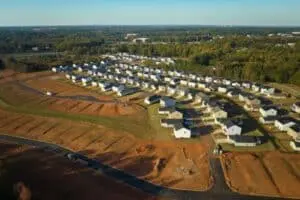
Jasper County, South Carolina, located just a few miles north of Savannah, Georgia, was recently deemed America’s Fastest Growing County. According to Census Bureau data, the county grew by an astonishing 31% in just the last six years. With its proximity to the Atlantic beaches, low taxes, and generally warm and sunny weather, Jasper County – and hundreds of other counties in this corner of the country – is feeling the crunch of retirees from northern states escaping to the south.
As can be expected, the locals are not necessarily thrilled by this growth and the additional strain on resources. Many long-time residents realize that the growth of Savannah, Hilton Head Island, and Charleston in the last few decades is now spreading inland for a new ring of urbanization and congestion. As the New York Times article notes: “where some see paradise, others see profound growing pains. Traffic issues abound. Some health care services are strained. And the growth shows no sign of slowing, much to the alarm of conservationists.”
Environmental groups are also getting involved to protect native species and their natural habitats from more destruction. The Coastal Conservation League and the South Carolina Environmental Law Project are monitoring the continued growth and filing lawsuits to stop rezoning efforts that would enable even more development. Some locals fear that the willingness and ability to protect any land within the county will diminish over time, allowing developers to pave over ever larger swaths of once-pristine natural areas.
Is this happening near you? Please send us articles and comments and we will try to incorporate your story into a forthcoming issue of Population Pulse.
To read the New York Times article, please visit this link.
To read NPG’s State Profile on South Carolina, please visit our State Profile page.

Please support our mission
with a monthly contribution to NPG.
Enrollment in NPG's President's Circle program enables your monthly gift to be processed with no effort on your part. Please click here to sign up.
This program is very beneficial to NPG as it helps secure a line of funding to support our normal educational programs, including our informative Forum papers and our thought-provoking advertisements.
We have many members enrolled in this program and we constantly hear how easy it is! Monthly contributions can be as low as $8 per month, although some contribute $50 or even $100 monthly! You can manage your participation online or with a simple phone call or email to NPG.
Please consider enrolling in this special program today! As a reward, we will forward to you an exclusive President's Circle lapel pin to help show your pride in NPG's efforts to slow, halt, and eventually reverse immigration-driven population growth!
Unhealthy Air Nationwide
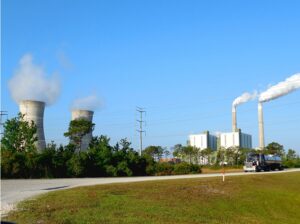 A new report highlighted by CBS News reveals that air pollution remains a widespread and growing concern across the United States. In the April 22, 2026 article “Nearly half of U.S. kids are breathing unhealthy air,” journalist Emily Mae Czachor notes that 152 million Americans—about 44% of the population—live in areas with unhealthy levels of pollution, including 33 million children. As the article mentions: “just breathing air in the places they live can be harmful,” which underscores the scale of exposure nationwide.
The report, based on data collected between 2022 and 2024, evaluated ozone (smog) and particle pollution (soot), finding mixed progress with some improvements alongside notable setbacks. In addition to traditional pollution sources like vehicles and power plants, emerging contributors—such as data centers supporting artificial intelligence—are adding new pressures to air quality. At the same time, regulatory changes have raised concerns, with the report warning that weakening environmental protections could leave children “more exposed and more vulnerable” to harmful pollutants.
These findings point to a broader dynamic linking environmental degradation to population pressures. As the U.S. population grows, so too does the demand for energy, transportation, and digital infrastructure—all of which contribute to increased emissions. More people require more electricity, more vehicles on the road, and more industrial activity, intensifying the concentration of pollutants in the air. Even technological expansion, such as the rise of AI-supporting data centers, reflects growing consumption patterns tied to a larger population base.
The result is a compounding effect: environmental systems are asked to absorb increasing levels of pollution while simultaneously supporting more people. As development expands and resource use rises, the capacity of natural systems to maintain clean air is strained. This underscores a central challenge—air pollution is not only a matter of regulation or technology, but also of scale. Addressing long-term air quality concerns requires recognizing how continued population growth amplifies these pressures, shaping both the extent of pollution and its impact on public health.
To read the article, click here.
To read more about overpopulation and the environment, click here.
Texas Border Crisis

During the months of March and April, border crossings near Laredo, TX, surged by about 50% compared to the previous two-month period. In response to the new data released in recent days, more than 200 agents were quickly deployed to the area to help stop this dangerous trend. While NPG does not always agree with the current administration and its tactics, we are very grateful to know that the resources to reduce or completely stop this pattern are in place and fully operational.
Securing our nation’s borders, particularly the southern border where so many illegal crossings occur, is vital to our efforts to end illegal immigration.
The News Nation video outlining these recent findings is available here.