Population Pulse | Issue 28
- NPG
- April 9, 2026
- Population Pulse Archive
- 0 Comments
Texas Continues to be Tough on Illegal Immigration

The Texas Commission of Licensing and Regulation recently adopted a new standard that will require anyone applying for a professional license – from electricians and plumbers to dog walkers and cosmeticians – to provide proof of legal presence in order to receive their license.
This follows a series of events within the Lone Star State, beginning with residents and small-town politicians attempting to discourage illegal crossings as unprecedented numbers of illegal immigrants entered the nation during President Biden’s term in the White House. More recently, Texas officials have intervened in commercial drivers’ licenses, vehicle registrations, and voters’ registrations.
Of particular note, the new requirement related to professional licenses would exempt immigrants who received asylum status, those who were in the country as a refugee, or those who had been “recognized as a victim of human trafficking,” among some other special circumstances.
During the open comment period before official adoption of the new standard, 450 comments were submitted. Only 28 of those 450 were against the proposal, indicating widespread support for the effort.
NPG has never formally addressed the issue of restrictions on professional licensure, but we consider this new idea to be related to workplace enforcement efforts which we fully support. Knowing that most illegal immigrants enter the U.S. seeking employment opportunities, requiring full participation with the nationwide E-Verify program is a vital first step in cutting off the job magnet. NPG believes that every employer, large and small, should be required to confirm the legal status of all employees and be severely fined by authorities for violations.
To read the article on the new requirements in Texas, visit Houston Public Media.
To review NPG’s position on E-Verify and other aspects of our nation’s immigration system we strongly encourage you to review our Proposed National Population Policy.
Please support our mission
with a monthly contribution to NPG.
Enrollment in NPG's President's Circle program enables your monthly gift to be processed with no effort on your part. Please click here to sign up.
This program is very beneficial to NPG as it helps secure a line of funding to support our normal educational programs, including our informative Forum papers and our thought-provoking advertisements.
We have many members enrolled in this program and we constantly hear how easy it is! Monthly contributions can be as low as $8 per month, although some contribute $50 or even $100 monthly! You can manage your participation online or with a simple phone call or email to NPG.
Please consider enrolling in this special program today! As a reward, we will forward to you an exclusive President's Circle lapel pin to help show your pride in NPG's efforts to slow, halt, and eventually reverse immigration-driven population growth!
The Debate Over Birthright Citizenship
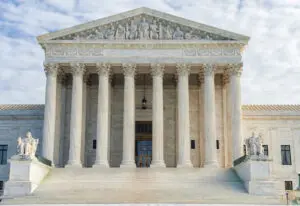
Just last week, the Supreme Court heard preliminary arguments in Trump vs. Barbara. The High Court may revisit the case in June or July. If ultimately decided by the Supreme Court, this case has the potential to change our nation’s current interpretation of the 14th Amendment for generations to come.
Very importantly, the case before the court is about the powers of the presidency, not specifically about immigration law. May a president issue Executive Orders that (according to some interpretations) violate the parameters of existing law, or more precisely, go against a Constitutional Amendment?
NPG has advocated for clarification of the 14th Amendment for nearly two decades. We have supported various pieces of legislation that would require that at least one parent of a child be a U.S. citizen or a legal permanent resident in order for that newborn to receive U.S. citizenship at birth.
Pew Research Center recently published an article detailing some of the specific considerations as our nation continues to debate this vital topic. Some of the highlights include:
- In 2023, about 320,000 babies were born in the U.S. to mothers who were in the country illegally. About 260,000 of those 320,000 did not have a father who met the minimum eligibility requirements.
- From 2006 to 2023, about 5.1 million babies were born to mothers with no legal status in the U.S. About 4.4 million of these also did not have a father in the nation legally.
Of all of the arguments over immigration reform, Birthright Citizenship should be the simplest to resolve, yet it remains hotly debated and divisive. While NPG does not necessarily agree that a sitting president should be able to change or define a Constitutional Amendment, we do appreciate renewed interest in the subject. NPG prefers a more traditional legislative process to clarify the 14th Amendment – one that can be upheld for many generations (and new administrations) – compared to the current approach which, in theory, can be reversed by the next president. At best, we would see:
- Formal legislation, passed in an established manner, that clearly defines any ambiguities of the 14th Amendment and would become the legal standard for future generations.
- Or, a new Constitutional Amendment, to either reverse the current 14th or to more sharply define who is protected by Birthright Citizenship.
NPG will monitor the development of this case over the next few months, and issue updates as needed.
The article from Pew Research Center is available here.
For more information from NPG on this topic, we encourage you to review Reforming Birthright Citizenship: A Must for U.S. Population Policy.
The Hidden Risks of Spring Cleanup for Pollinators
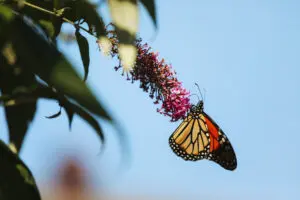
As Earth Day approaches, many people look for ways to refresh their homes and yards—but experts caution that traditional spring cleanups can unintentionally harm one of nature’s most essential allies: bees. Early-emerging species like the cellophane bee (Colletes inaequalis) spend most of the year overwintering underground or within leaf litter and plant stems. Clearing these materials too soon can destroy vital nesting habitat before bees have a chance to reemerge.
“When you lose that habitat, you lose both the foraging resources as much as the nesting resources. It’s not just bumble bees and other pollinators at risk, you lose so many other things.” - Toby Shaya, Rhode Island entomologist with the Department of Environmental Management.
Pollinators are critical to both ecosystems and food systems, with roughly 90% of plants relying on animals or insects for pollination and about 35% of global crop production dependent on their activity. Yet bee populations are under growing strain from habitat loss, pesticide use, and environmental change, with only a small number of species showing signs of recovery.
Earth Day serves as a reminder that environmental stewardship can begin with small, tangible choices. Protecting pollinators also means addressing the broader pressures driving habitat loss. As human populations expand and land use intensifies, even well-intentioned actions—like yard cleanups—can contribute to cumulative ecological strain. Leaving leaves in place a little longer, planting native species, and reducing chemical use are simple ways individuals can support pollinators.
To read the article, click here.
Submit your articles to NPG
 Thank you for reading NPG’s Population Pulse.
Have you recently read something that is directly related to population growth that you think NPG should be talking about?
Please share it with us by emailing it to PopulationPulse@npg.org.
US Loosens Endangered Species Protections for Gulf Oil Drilling

A rare federal decision to waive environmental protections in the Gulf of Mexico is drawing sharp criticism from conservation groups and legal experts. In late March, the Endangered Species Act committee voted unanimously to exempt oil and gas drilling operations from safeguards designed to protect vulnerable wildlife. The move, supported by officials in the Trump administration, was justified on national security and energy production grounds, particularly amid global instability affecting oil markets.
The exemption could have serious consequences for species already on the brink. Among them is the Rice’s whale, with an estimated population of just 50 individuals, as well as sea turtles, birds, and Gulf sturgeon that rely on the region’s ecosystem. Environmental advocates argue the decision is both unprecedented and unlawful, and legal challenges are expected.
This move has drawn criticism, with Andrew Bowman of the advocacy group Defenders of Wildlife stating: “The Endangered Species Act has not slowed an iota of oil from being extracted from the Gulf. I cannot stress enough how unprecedented and unlawful this action is.”
The decision to remove environmental protections from the Gulf of Mexico highlights the growing tension between rising energy demand and ecological limits. As population-driven consumption increases, pressures to expand resource extraction intensify—often at the expense of already fragile ecosystems and the species that depend on them.
To read the article, click here.
To read a Forum paper about the dismantling of environmental protections, click here.