
Population Pulse | Issue 31
- NPG
- May 21, 2026
- Population Pulse Archive
- 0 Comments
“Go West, Young Man” Once Meant Something in This Country
 Last week – May 14, 2026 – marked the 222nd anniversary of the first steps of the Lewis and Clark Expedition. Commissioned by President Thomas Jefferson to explore the vast territory acquired with the Louisiana Purchase, the men and their small crew set out on their journey in May of 1804. They returned in September of 1806 with knowledge that would change the United States in profound ways.
At the time of their departure, the United States was still a small nation of about 6 million citizens, most of whom lived near the coast of the Atlantic Ocean. (Note: the 1800 Census counted 5.3 million people, and the 1810 Census found 7.2 million.) As westward expansion continued, more states were added to the union and our nation’s course in history began to take hold. This was an exciting time, and many were thrilled to have the opportunity to move west, acquire a homestead, and settle into a new-found life. The nation grew enormously between 1800 and 1900, adding more than 70 million new residents.
“Go West, young man” is commonly attributed to the American author and newspaper editor Horace Greeley, although there is no proof of this claim. At its time, the phrase conveyed a sense of exploration and wonder. In the mid-19th century, the country had thousands of miles of waterways and trails yet to be discovered by European settlers. We were building a nation and believed we had an endless supply of open terrain to do so.
“Go West, young man” proved to be a dangerous belief. The vast open spaces that existed in the 1800s soon became populated, then more populated, and eventually incredibly overpopulated. States such as Colorado, Utah, Arizona, and Nevada are among the fastest growing in the nation and there appears to be no end in sight. Meanwhile, nearly all cities and towns in the west now struggle to supply the most basic service – clean water – to their residents, not to mention the dozens of other problems caused by population growth.
‘Go West, young man” was entirely appropriate when we had open space to explore and plenty of resources for all. Today, we need a new catchphrase to fully embody our current dilemma. With a population of more than 342 million people and very little quality land left to settle, a phrase like Stop at Two and Limit Immigration needs to become far more popular than it is now. Let us hope – and continue to work together – to make this sentiment as memorable as “Go West, young man.”
To help us reach more concerned citizens, please forward this article to a friend.
To read History’s brief article on the anniversary of the Lewis and Clark Expedition, click here.
Many NPG Forums papers discuss these general themes. Additionally, our State Profile series includes editions for several states in the West.
Rural Areas May Not Be So Sleepy After All
Despite many common stereotypes, America’s rural areas are not necessarily shrinking, vacant corners of the country. An article from Progressive Farmer (May 13, 2026) outlines several recent trends within our nation’s more serene towns and counties.
From 2020 to 2024, more than 970,000 people moved to rural areas: 69% of these new people were already living in other parts of the U.S. and 31% were a result of immigration. This recent movement reverses a trend that had been in place since the 1970s and 1980s, when America’s farms began to transform from small, family-owned entities to large, corporate enterprises, causing many to leave the simple life in favor of America’s larger cities.
Within the article, author Shoshanah Inwood, a rural sociologist with Ohio State University, speaks with Tim Youngquist, an Iowa farmer who left the rural life for Southern California for a brief stint:
“What he found is that the communities with small- and medium-sized farms really had better-quality services, more civic engagement, lower crime rates, better education, better outcomes all around," Inwood said. "You had more local regional economies. You've got more tax dollars coming in. You have more people who are also able to participate in community life, whether they're participating in 4-H, they're acting as advisers, they're sitting on school boards, they're able to be on their town council, their volunteer fire departments. All of these things take people.”
Many share these sentiments. Since the COVID-19 pandemic ravaged America’s largest cities, migration rates to rural areas have grown from near zero (2017-2020) to .47% for the 2020-2021 period. The article also reveals that most of this return to rural life is taking place in counties fairly near metro areas – the outer ring of the suburban belt – where new residents are more likely to find some of the amenities they have come to know. Census Bureau data has shown us that some of the counties in the outer rings of suburbia are among the fastest growing in the nation. In places like Texas and Florida, this trend is very evident.
Data from an article titled Fastest Growing Counties in America, which cites data from the U.S Bureau of Labor Statistics and the U.S. Census Bureau’s American Community Survey, among other sources, reveals the following ten fastest-growing counties:
Kaufman County, Texas – metropolitan Dallas
Comal County, Texas – metropolitan San Antonio
Rockwall County, Texas – metropolitan Dallas
St. John’s County, Florida – metropolitan Jacksonville
Hays County, Texas – located between Austin and San Antonio
Brunswick County, North Carolina – home to Wilmington
Parker County, Texas – located just west of Fort Worth
Jackson County, Georgia – metropolitan Atlanta
Walton County, Florida – located near Tallahassee
Lincoln County, South Dakota – just south of Sioux Falls
What will the future hold for America’s less populated and more remote counties, and how long will they remain “rural”? Only time will tell. At NPG we fully understand that population growth continues in nearly every corner of the country. We will remain true to our cause: to educate all Americans from all walks of life, including our nation’s political leaders, regarding the devastating effects of population growth, and the need for policies designed to slow, halt, and eventually reverse our growth trend.
To read the original article from Progressive Farmer please visit this link.
For the complete list of fastest growing counties, click here.
Please support our mission
with a monthly contribution to NPG.
Enrollment in NPG's President's Circle program enables your monthly gift to be processed with no effort on your part. Please click here to sign up.
This program is very beneficial to NPG as it helps secure a line of funding to support our normal educational programs, including our informative Forum papers and our thought-provoking advertisements.
We have many members enrolled in this program and we constantly hear how easy it is! Monthly contributions can be as low as $8 per month, although some contribute $50 or even $100 monthly! You can manage your participation online or with a simple phone call or email to NPG.
Please consider enrolling in this special program today! As a reward, we will forward to you an exclusive President's Circle lapel pin to help show your pride in NPG's efforts to slow, halt, and eventually reverse immigration-driven population growth!
Ancient Oak Protected as California Sprawl Expands
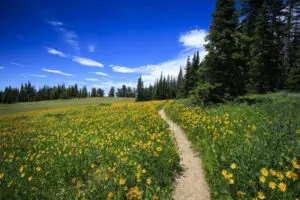
The conservation of California’s ancient Jurupa Oak marks a significant environmental victory amid ongoing development pressures in the Inland Empire of Southern California. According to a recent report from SFGate, the sprawling Palmer’s oak — commonly known as the Jurupa Oak — has secured new protections after years of concern surrounding a massive proposed development in Jurupa Valley. “The tree, thought to be at least 13,000 years old, is not only historic; it’s also considered culturally vital to the Gabrieleño Band of Mission Indians’ Kizh Nation,” journalist Farley Elliott wrote. The project originally proposed approximately 1,700 residential units across 918 acres, along with a business park, school, and other community infrastructure.
Environmental organizations and Indigenous advocates pushed for stronger safeguards, leading to a revised agreement that preserves additional land around the ancient organism. In 2024, “a consortium of groups, including the Center for Biological Diversity, sued the city of Jurupa Valley in an effort to better protect the historic Palmer’s oak,” Elliott reported. The final agreement establishes nearly 55 acres of protected open space surrounding the tree and pushes development boundaries farther away. The Center for Biological Diversity noted that the agreement also reduces the project footprint, creates opportunities to conserve additional acreage, and establishes protections such as wildlife corridors, reduced lighting, native landscaping, and fencing designed to minimize environmental harm. The organization further described the Jurupa Oak as “the oldest-known living plant in California and the third-oldest known living plant on Earth.”
The outcome highlights the increasingly difficult balance between growth, sprawl, and conservation in rapidly developing regions. Southern California continues to face mounting pressure from housing demand, infrastructure expansion, and population growth, all of which intensify competition for land and natural resources. While housing development remains an important societal need, this case demonstrates how large-scale sprawl can place extraordinary strain on fragile ecosystems and culturally significant landscapes that cannot simply be replaced once damaged or destroyed.
For Negative Population Growth supporters, the Jurupa Oak serves as a powerful symbol of long-term ecological resilience colliding with short-term development pressures. Importantly, the issue is not opposition to housing itself, but recognition that continued population growth and outward expansion increasingly force communities into difficult tradeoffs between development and preservation. As urban areas spread farther into undeveloped landscapes, conservation conflicts are likely to become more common — making thoughtful land use planning and efforts to stabilize population growth increasingly important to protecting the natural world for future generations.
To read the SFGate article, click here.
To read the Center for Biological Diversity press release, click here.
Protecting Biodiversity for Future Generations

Each year on May 22, the United Nations (UN) observes the International Day for Biological Diversity to raise awareness about the importance of protecting Earth’s ecosystems, species, and natural resources. The 2026 theme, “Acting locally for global impact,” emphasizes the idea that meaningful environmental progress often begins at the community level. According to the UN, “...major changes begin on a small, local scale. The success of this plan to reverse biodiversity loss depends on the strength of local actions—on the commitment of communities, organizations, and governments working together.”
The observance also highlights increased global concern over biodiversity loss caused by human activity. The UN notes that “While there is a growing recognition that biological diversity is a global asset of tremendous value to future generations, the number of species is being significantly reduced by certain human activities.” Biodiversity supports healthy ecosystems, food supplies, clean water, and environmental stability, making its protection increasingly important as development pressures and resource demands continue to expand worldwide.
Observance of the International Day for Biological Diversity reflects the importance of environmental education and long-term sustainability because – as the UN plainly states – “When biodiversity has a problem, humanity has a problem.” The organization also notes that “Given the importance of public education and awareness about this issue, the UN decided to celebrate the International Day for Biological Diversity annually.” In a similar spirit, Negative Population Growth works to educate Americans about the environmental impacts of continued population growth, including habitat loss, declining biodiversity, resource depletion, and increasing development pressures on natural ecosystems. As communities around the world pursue local conservation efforts, broader conversations about sustainability and population growth remain important to protecting biodiversity for future generations.
To read more about the UN’s International Day for Biological Diversity, click here.