Earth’s Limits Are No Longer Theoretical, Study Warns
- NPG
- May 15, 2026
- NPG Commentary
- 0 Comments
New research suggests humanity may already be exceeding the planet’s carrying capacity.
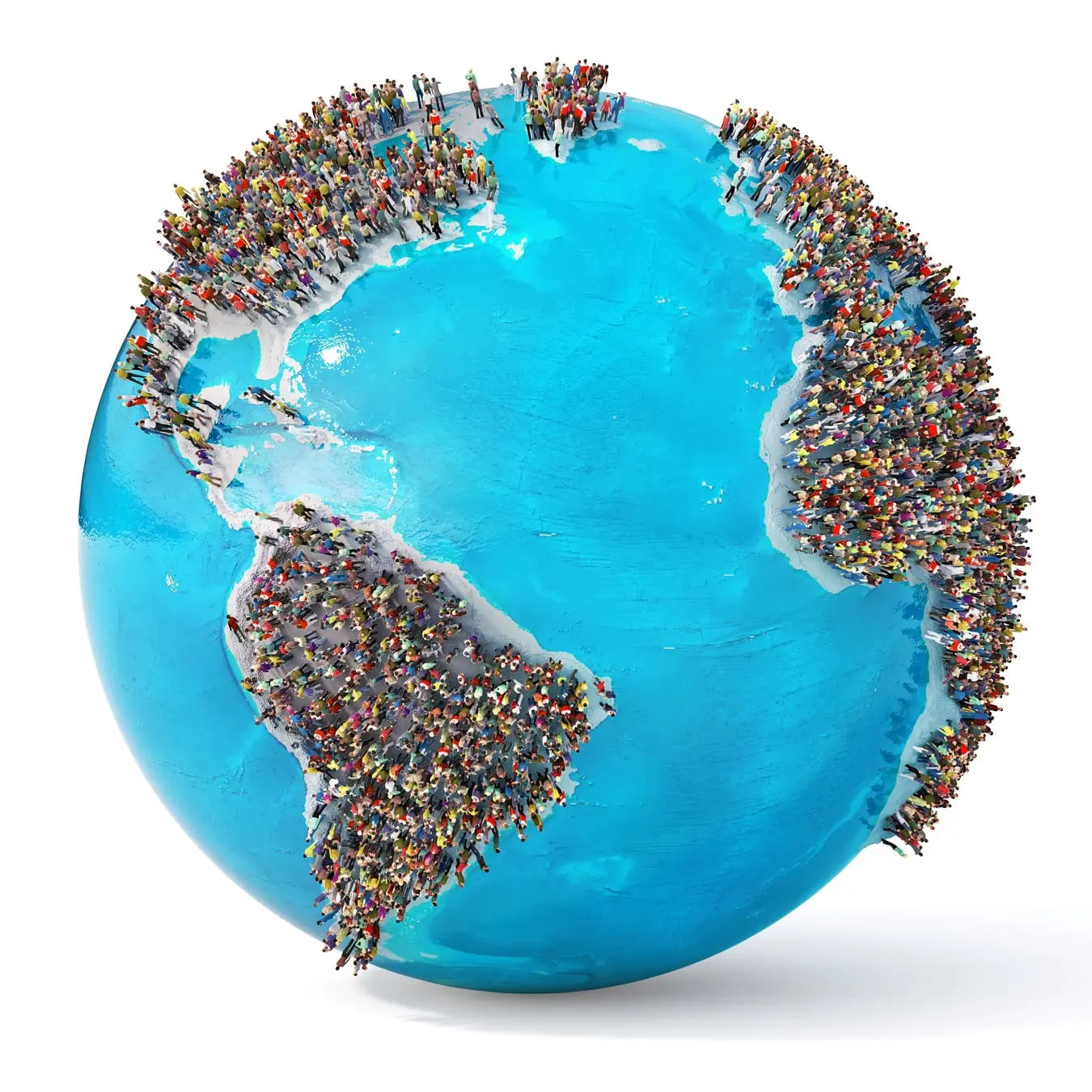
A new study, titled “Global Human Population Has Surpassed Earth’s Sustainable Carrying Capacity” was recently highlighted by Science Alert. It warns – as the title overtly states – that humanity may already be living beyond what Earth can sustainably support. Drawing from more than two centuries of global population data, researchers led by Corey Bradshaw of Flinders University in Australia concluded that current levels of human demand are placing unsustainable pressure on the planet’s natural systems. The study, published in the journal Environmental Research Letters, found that while Earth’s theoretical maximum carrying capacity may be around 12 billion people, the planet’s “optimal” sustainable carrying capacity is far lower – estimated at approximately 2.5 billion people under current patterns of resource use.
The article explains that researchers identified a major demographic shift beginning in the mid-20th century. As journalist Jess Cockerill writes: “It revealed that human societies have shifted from a trend where more people meant a higher rate of population growth, to one where the curve began to flatten: that is, with greater population sizes, the rate of increase declined.” Despite slowing growth rates, the study warns that environmental strain continues to intensify as population size and consumption increase together. It is also very important to note that the article speaks of “slowing” growth rates, meaning that our total population is still growing!
The article also notes that “fossil fuels are also driving human-caused climate change that is disrupting ecosystems and natural resources globally.” Lead researcher Corey Bradshaw cautioned that “Earth cannot keep up with the way in which we are using resources. It cannot support even today’s demand without major changes, with our findings showing that we are pushing the planet harder than it can possibly cope.”
For Negative Population Growth, this study reinforces a concern that has been central to our mission for decades: population size matters. Technological innovation and efficiency improvements can help reduce environmental impacts, but they cannot fully offset the pressures created by continued population growth combined with rising consumption. As ecosystems face increasing stress from resource extraction, habitat loss, pollution, and climate disruption, the relationship between human numbers and environmental sustainability becomes more difficult to ignore.
The researchers emphasize that humanity’s “life support systems are already under strain” and warn that without major changes in how we use land, water, food, and energy, billions of people could face increasing instability in the years ahead. These findings align closely with NPG’s longstanding position that long-term environmental protection and resource security require ending population growth and progressing towards an eventual reduction in total numbers. A sustainable future will depend not only on cleaner technologies and conservation efforts, but also on policies and cultural shifts that recognize ecological limits and work to reduce humanity’s overall footprint on the planet.
To read the original article, click here.
To read the study, click here.
To read more about population growth issues, click here.