When Water Runs Low, Population Matters
- NPG
- September 16, 2026
- NPG Commentary
- 0 Comments
Drought, wildfires, and population growth are putting increasing pressure on America’s water resources.
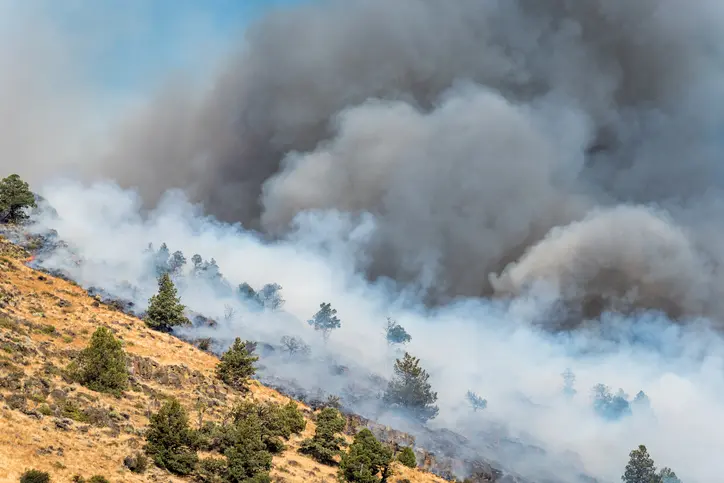
Across parts of the United States, severe drought is putting that reality into sharp focus this summer. Reservoirs are dropping, rivers and streams are running low, farmers are facing water shortages, and dry conditions are helping wildfires spread quickly across already parched landscapes. In Utah, where the entire state was experiencing some level of drought in late August, reservoirs averaged just 52% full and more than 553,000 acres had burned. “Our reservoirs, lakes and streams are really struggling this year,” said Utah Division of Water Resources Director Joel Williams.1
Utah is far from alone. Across the Pacific Northwest, drought has depleted reservoirs, reduced streamflow, dried soils, and vegetation, and led to water shortages affecting communities, utilities, and agriculture. By late August, about 3.5 million acres had burned across Oregon, Idaho, and Washington, including 2.4 million acres in Oregon alone. While drought does not start wildfires, it can create conditions that allow them to spread rapidly and become more destructive. As Oregon State Climatologist Larry O’Neill explained, “Drought didn’t cause these ignitions, but they created the conditions with exceptionally dry vegetation and fuels that favor rapid fire growth and extreme impacts once those fires started.”2
These conditions are part of a much larger water challenge. A 2026 U.S. Geological Survey study examining water supply and human water consumption across the contiguous United States found that 26.7 million Americans – 8% of the population – live in areas with chronic high or severe water limitations. While the nation as a whole has more water available than it consumes, the researchers found that water can become limited at the local and regional levels because both supply and demand vary greatly by location and over time. The greatest water limitations occurred in the central and Southwestern United States, where low supplies combined with high levels of water use, particularly for irrigation.3
Water availability, then, is not simply a question of how much water nature provides – it is also a question of how much people use. The USGS study measured water limitations by comparing available water with human consumption for crop irrigation, thermoelectric power generation, and public water supply.4 As drought reduces available supplies, those demands do not disappear. And as population grows, more people require water for homes, food production, energy, and the communities and infrastructure that support them. In already water-stressed areas, continued population growth can place even greater pressure on a resource that is both essential and finite.
Population growth adds another layer of pressure to this already difficult equation. Every additional person requires water directly for drinking, cooking, bathing, and other daily needs, but our water footprint extends much further. Growing populations also require more food, energy, housing, businesses, and public infrastructure—all of which depend on water. When growth occurs in places where water is already limited, increasing demand can make it even harder to balance the needs of residents, agriculture, industry, and the natural ecosystems that depend on the same finite resource.5
The drought and wildfires of 2026 are stark reminders that our natural resources have limits. We cannot control when or where drought will occur, but we can recognize that continued population growth increases demand for the water we have available. A lower rate of population growth will not end drought or prevent wildfires, but it can help reduce the added pressure we place on already strained water resources. For NPG, the lesson is clear: building a more sustainable future means bringing the size of our population into better balance with the finite natural resources upon which we all depend.
Notes:
- https://water.utah.gov/drought-update-08-27-2026/
- https://oregoncapitalchronicle.com/2026/08/25/northwest-late-summer-days-marred-in-historic-drought-exacerbating-wildfires/
- https://www.usgs.gov/publications/local-water-use-and-climate-variability-drive-water-stress-and-alter-ecological-flows
- ibid.
- https://www.cfr.org/backgrounders/water-stress-global-problem-thats-getting-worse