
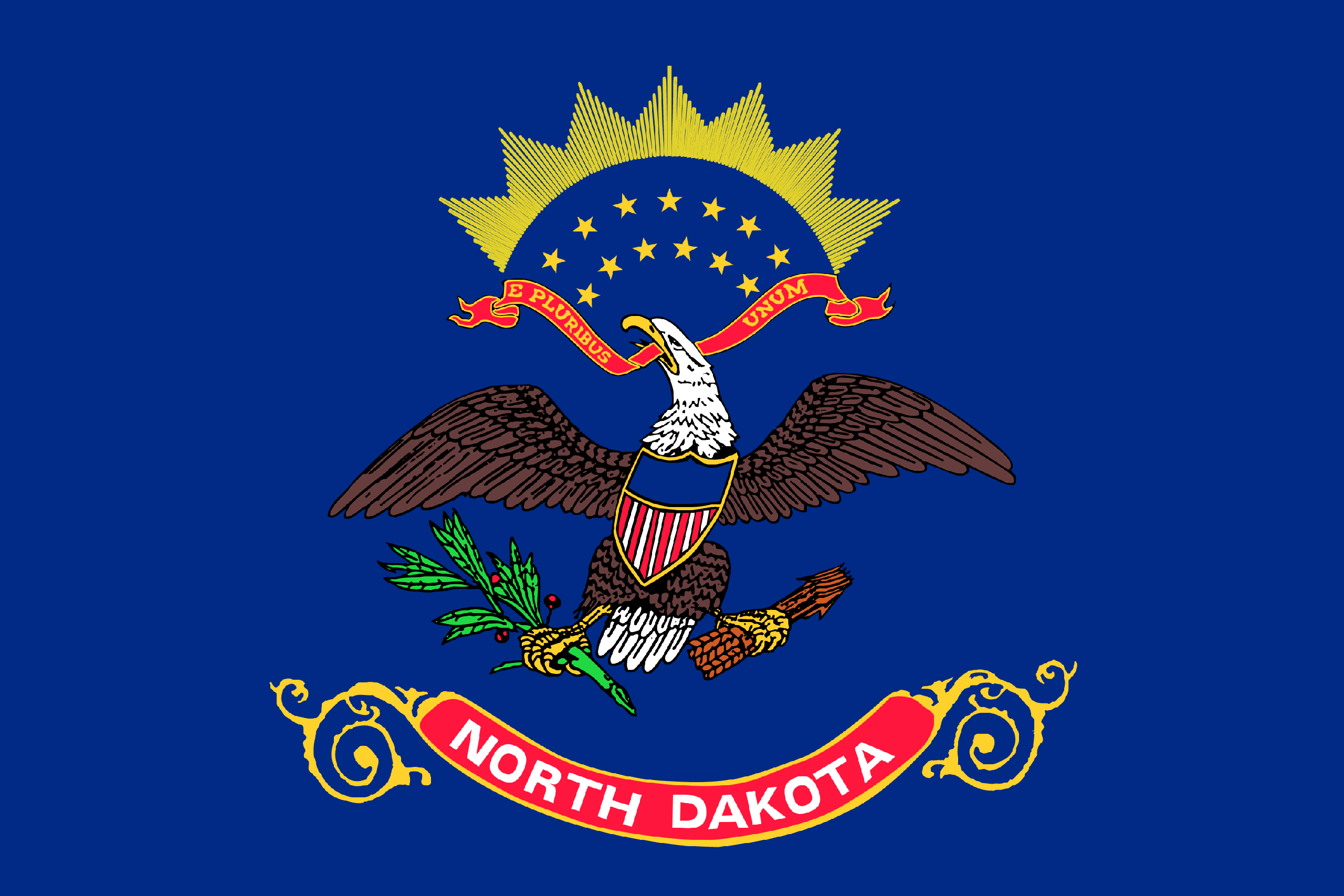
North Dakota State Profile
- NPG
- January 14, 2026
- State Profile Series
- 0 Comments
The Coen brother’s film Fargo was a big hit in 1996. A small budget film, it did well for its makers and investors. The movie painted life in the bleakness of a North Dakota winter with brushstrokes of ironic humor and dark wittiness. Not many films are set in fly over country and the view from 30,000 feet or the occasional rest stop rarely depicts the reality of this region.
FROM PAST TO PRESENT
As the movie’s tagline suggests, “a lot can happen in the middle of nowhere.” North Dakota achieved statehood on November 2, 1889 as our 39th state. Teddy Roosevelt was a cattle rancher there before becoming president and in 1947 North Dakota's only national park was named after him. Theodore Roosevelt National Park is located in the far western part of the state. This gem of 70,000 acres is home to 186 species of birds, and a wide variety of Great Plains wildlife. On the way to Montana, a stop there promises the lucky and patient observer encounters bison, coyotes, cougars, mustang horses, elk, bighorn sheep, both mule and white-tailed deer, pronghorn, and prairie dogs.1
Before statehood, many native nations called the region home. These original inhabitants were made up of tribes that could survive its continental climate consisting of short hot summers and long, cold winters. Without mountains, the wind is also a constant presence. Those who followed and hunted bison were nomadic, and others lived in more permanent encampments around the Missouri river and did more farming.2
There are four Indian reservations in North Dakota. They are located in all parts of the state. Fort Berthold Reservation is the largest, which belongs to the Three Affiliated Tribes (the Mandan, the Hidatsa, and the Arikara). The rest are: the Spirit Lake Reservation, home of the Spirit Lake Tribe; the Standing Rock Reservation, home of the Standing Rock Sioux Tribe; and the Turtle Mountain Reservation, home to the Turtle Mountain Band of Chippewa Indians. Although most of the tribal trust land belonging to the Sisseton Wahpeton Oyate Tribe is located in South Dakota, a small amount of it also exists in southeastern North Dakota.3
The fur trade of the 1700s brought French, Scots, English and Canadians into North Dakota. Later in the 1800s a group of mixed ancestry, the Métis, also lived there, as Native Americans and Europeans had families together. Other early settlers included ethnic Germans who made their way to the middle of America from Russia. Norwegians also settled in the state. In 1890, the US census counted 190,983 residents. Today its population is 796,568.
Geographically, North Dakota borders the Canadian provinces of Saskatchewan and Manitoba to the north, with South Dakota on its southern border. Minnesota lies on its eastern border and Montana borders it to the west. North Dakota is mostly a rural state with a total acreage of 44.1 million acres, 40 million of which are dedicated to agriculture. Its two main rivers are the Red River of the North, flowing north and defining its eastern border, and the Missouri River, flowing in an arch-like pattern from the western border with Montana until it meets the border of South Dakota about halfway across the state. Eventually the Missouri River meets up with the Mississippi River further southeast in St. Louis, Missouri.
The rectangular state has three geographical regions. From east to west these are the Red River Valley, the Drift Prairie and the Missouri Plateau. Of the three, the Red River Valley is the most fertile and it is where most of North Dakota’s crops are raised.4
If North Dakota had to sustain its residents with food grown and raised in its landscape, they would be eating sunflower seeds and its oil, spring wheat, durum wheat, soybeans, canola oil, corn, beef cattle, bison, poultry, sheep, goats and some emus and rabbits.
THE MIDDLE EAST OF THE MIDWEST
The one thing North Dakotans produce that the people can’t eat is shale oil. It is a fossil fuel with many impurities, but high oil prices in the first decade of this century made the expensive and laborious process profitable.
The area’s geology has contributed to North Dakota’s oil boom in recent years. Approximately 360 million years ago, a 100-250-foot-deep sea covered what is now western North Dakota, Montana and the southern part of Canada’s Saskatchewan Province. Though the sea wasn’t very deep it was teeming with life. As the water receded, the plants and algae it contained eventually formed what became known as the Bakken oil shale formation, the source of the North Dakota version of an oil boom.
To be clear, North Dakota has deposits of oil shale, not tar sands. These two different types of impure fossil fuel deposits require mining strategies specific to their geology. Both types are difficult to extract and leave deep scars on the earth and pollution in their wake. Tar sands are found in Canada’s Alberta province, Venezuela, and eastern Utah. They are usually mixtures of bitumen (tar) clay, sand, and water. While the mixture is much like heavy crude oil, it is more viscous and cannot be pumped out. Tar sands are strip mined, heated and treated by adding hydrogen.
Processing both oil shale and tar sands is both energy and pollution intense. Oil shale contains kerogen, a waxy, solid organic material.
Fracking came to North Dakota in 2010 with a vengeance, drawing people from all over the country, especially from the other oil producing states of Texas and Louisiana as well as local residents. The state on average has exponentially grown due to the oil boom adding 100,000 workers since 2009, however the growth was uneven throughout the state. The counties near the oil shale grew in population while those in other parts of the state remained steady or even declined. The oil boom is responsible for North Dakota’s position as the leader in population growth (by percentage) in the country. This growth has been dominated by men as they are the ones seeking the oil jobs. “From 2009 to 2013, the number of men in North Dakota increased by 14% (46,000), compared with a 9% increase among women (30,000).”5
Fracking for oil shale requires vertical drilling followed by horizontal drilling into rock. Forcing liquid infused with sand into fissures to force gas and oil out of the shale makes this an expensive process, although it became profitable when overseas prices of oil increased. The inspiration to invest in fracking came from political pressure to increase energy self-sufficiency. Because methane gas is released during drilling, flaring (the burning of methane) is often a standard practice at fracking sites. This contributes to concerns of air pollution and a higher concentration of climate change gases. Added to the list of these problems are greater incidences of cancers and more earthquakes, but at the end of the day, the demand for energy and the jobs and money offered override any health or environmental concerns.
The population growth exceeded the housing and infrastructure available, spurring the hasty construction of several man-camps to accommodate the new workers. These adult men applied for these jobs and accepted the terms even though it meant living far away from home. The communities grew reputations for being unsafe especially for the few women who lived there. The police departments reported higher rates of sexual assault in these oil boom towns.6 This may in part be due to the fact that North Dakota has become the state with the third highest ratio of single young men to single young women in the U.S.7
The pipelines that were needed to transport the oil went over Indian land and the fear of leaking and contamination brought a lawsuit after much protesting all the way to the U.S. Supreme Court in the Dakota Access pipeline case.8
Like so many development deals, the so-called Bakken boom made significant money for oil and gas executives and those who made the initial investments on Wall Street. But as often happens, the taxpayers are being left to foot the clean-up bill and the tremendous environmental damage the industry is leaving behind in the form of flaring wells and decimated landscapes.
Population grew along with the job opportunities. The city of Williston, on the Montana border, was where most of the growth happened. Williston’s population was under 20,000 in 2010 and grew to over 30,000 by 2014.
FOSSIL FUELS AND PEOPLE’S HEALTH
Studies have been done in Pennsylvania to see what impact fracking may have on cancer rates. They found significant increases in particular cancers like lymphoma and increased incidences in childhood cancers.9
North Dakota also burns coal, which in turn generates 55% of the electricity used in the state. Burning coal creates soot pollution. A study done in 2023 revealed that there were 3,800 premature deaths annually due to the poor air quality near these coal-fired burning plants. Antelope Valley and Coyote are listed in the report as among the most deadly towns, with higher rates of asthma, bronchitis, blood clots, heart attacks, lung cancer, diabetes and others. North Dakota may be a land of wide-open spaces, but it has two main sources of air pollution, fracking and coal burning. Air pollution reduces life expectancy by more than two years, according to researchers at the University of Chicago.10
Just recently the Trump administration gave the state jurisdiction to monitor pollutants from the state’s coal-fired burning plants. Coal ash is the toxic residue from these dump sites which are a source of pollution. Poorly orchestrated and inadequately funded local monitoring would likely increase the already polluted water which wouldn’t currently pass federal drinking water standards. This is a big nod to coal companies and a big detriment to the people of North Dakota. The residents are vulnerable because 144 wells are within 2 miles of eight coal plants. Of those 125 are used as domestic drinking wells, 15 are for irrigation and four are used as public drinking wells.11
NORTH DAKOTA’S ECONOMIC PICTURE
North Dakota’s income profile varies quite a bit around the state. Grand Forks for example, located north of Fargo, has a median household income of $59,079 with 16.4 percent living in poverty. The city of West Fargo on the other hand has a median household income of $96,929, with 6.8% living in poverty.
As far as its unemployment rate, the state has a history of being below the national average and this varies by race and ethnicity. The unemployment rate is 2.3 % for white residents and as high as high as 7. 4 % for Black residents with 6.2% for Hispanic/Latino residents.12 Its relatively low population, under 1 million, and the low cost of living, which is below the national average, contribute to its low unemployment along with employment opportunities in energy.
PAYING ATTENTION TO THE HEARTLAND
The news cycle often follows what is happening in large cities and on both coasts. It makes sense that there is more news to report on where there are more people. But it is important to pay attention to what is going on in states in the center of our country. North Dakota is paying a high price for its population growth, driven largely by its profit-driven obsession with natural resource extraction.
Shining a light on what is really going on is important for it reflects a response to our country’s unsustainable growth. When big cities grow they demand more energy and in the often-forgotten places in the Midwest a high price is being paid.
Exploitation is an unfortunate thread woven into the fabric of this Great Plains state. Those in the energy industry who promise jobs in exchange for wages do not cover the damage done to local residents and their communities which have been altered and /or permanently compromised. While it looks like there is room for more people to move there, in an overpopulated world hungry for open space, that is an illusion.
People require more than open space. They need what North Dakota would have trouble offering: good non-polluting jobs, clean water and decent housing. The land is already in agricultural use and would be compromised with additional housing, roads and other infrastructure. What North Dakota residents need to do is focus on sustainability and environmental protections, not more growth.
Another quote from the Coen brother’s film Fargo is poignant here, “There’s more to life than a little money.”
Notes:
- https://en.wikipedia.org/wiki/Theodore_Roosevelt_National_Park
- https://www.justice.gov/usao-nd/indian-country
- https://www.indianaffairs.nd.gov/north-dakota-tribal-nations
- https://www.ndstudies.gov/gr4/north-dakota-agriculture/part-2-production-agriculture/section-1-geography-and-climate-north-dakota
- https://www.pewresearch.org/short-reads/2014/07/16/how-north-dakotas-man-rush-compares-with-past-population-booms/
- https://www.hcn.org/issues/45-13/the-bakken-oilfields-no-place-for-a-woman/
- https://grist.org/climate-energy/north-frackotas-population-boom-means-more-young-men-and-more-problems/
- https://www.nrdc.org/stories/dakota-access-pipeline-what-you-need-know
- https://www.cancertherapyadvisor.com/features/does-fracking-cause-cancer/
- https://www.sierraclub.org/minnesota/blog/2023/03/sierra-club-report-finds-north-dakota-coal-plants-some-most-deadly-nation
- https://earthjustice.org/press/2025/trump-administration-gives-north-dakota-final-approval-to-oversee-toxic-coal-ash-despite-concerns-about-drinking-water-and-health
- https://www.urban.org/policy-centers/cross-center-initiatives/state-and-local-finance-initiative/projects/state-fiscal-briefs/north-dakota/