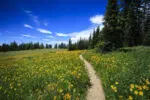

New NPG Paper Warns Population Growth Is Driving the Loss of America’s Natural Spaces
- NPG
- April 23, 2026
- Press Releases
- 0 Comments
Click here to download a PDF of this release.
Crowded Out: How Population Pressure Is Undermining Nature, Health, and Sustainability
A new Forum paper from Negative Population Growth, Inc. (NPG) warns that continued population growth in the United States is accelerating the loss of natural areas, limiting access to nature, and contributing to growing environmental and mental health challenges.
In The Necessity of Empty Places: Prescribing Nature for What Ails Us, Dr. Karen I. Shragg argues that the nation’s expanding population is placing unsustainable pressure on land, ecosystems, and infrastructure—undermining both environmental stability and human well-being.
“Population pressure is the silent force behind the loss of our wild areas,” writes Shragg. “The increase in numbers spawns a litany of development from housing, schools and strip malls to energy demanding data centers and power plants.”
This paper highlights a growing paradox: while nature is increasingly prescribed as a remedy for stress, anxiety, and physical illness, access to natural spaces is steadily declining. As development expands to accommodate population growth, forests, farmland, and open land are being replaced by infrastructure and urban sprawl.
According to the analysis, millions of Americans already lack access to nearby green spaces, and remaining natural areas are becoming more crowded and less accessible. This trend, Shragg notes, diminishes opportunities for solitude, recreation, and the psychological benefits associated with time spent in nature.
“There is no dispute that alienation from nature is causing harm to young and old,” Shragg pens. “But this alienation is less and less redeemable with a growing population.”
The Forum paper also connects population growth to broader environmental concerns, including biodiversity loss, water scarcity, and climate-related pressures. As land is developed, critical ecosystems are fragmented or destroyed, reducing their ability to provide essential services such as carbon storage and habitat preservation.
In addition to environmental impacts, Shragg emphasizes the importance of quiet, undeveloped spaces for human health and reflection—resources that are increasingly difficult to find in densely populated regions.
“As our population grows and sprawls both outward and upward, we are obliterating the silence we need,” she writes.
While conservation initiatives such as land preservation and park development are important, the paper argues these efforts are insufficient on their own. Without addressing the underlying driver of population growth, efforts to protect natural areas will continue to fall short.
Shragg calls for a more comprehensive approach that integrates conservation policy with population stabilization strategies, emphasizing that sustainable environmental outcomes depend on aligning human demands with ecological limits.
Alongside the release of this paper, NPG is inviting members to take part in its “Planting Hope for the Future” Seed Program, a nationwide effort to expand pollinator-friendly habitats. Participants receive a free packet of wildflower seeds to attract pollinators, along with simple planting instructions—enabling individuals to help restore biodiversity in their own communities.
Since 1972, NPG has worked to educate both the public and policy leaders about the impacts of overpopulation. With a steadfast commitment to reducing population growth to achieve a sustainable balance with our environmental resources, NPG continues to be a leading voice of reason in a world often driven by the pursuit of perpetual growth. NPG advocates for the adoption of its Proposed National Population Policy, with the goal of eventually stabilizing U.S. population at a sustainable level – far lower than today’s. We do not simply identify the problems – we propose solutions. For more information, visit our website at NPG.org, follow us on Facebook @NegativePopulationGrowth or follow us on X @npg_org.