

Living Beyond Earth’s Sustainability Threshold
On July 30, humanity will reach Earth Overshoot Day—the date when humanity has exhausted Earth's annual ecological budget of resources and services. From that point forward, our demand for nature's resources and ecosystems exceeds what Earth can regenerate during the entire year, meaning we are effectively borrowing from the future by depleting natural capital faster than it can be restored.
Earth Overshoot Day is determined using a straightforward calculation:
(Earth's Biocapacity ÷ Humanity's Ecological Footprint) × 365 = Earth Overshoot Day
This year's calculation shows that humanity is consuming nature approximately 73 percent faster than Earth's ecosystems can regenerate, requiring the equivalent of 1.73 Earths to sustain humanity's current level of resource use. Although Earth Overshoot Day falls six days later than last year's estimate, this does not reflect a meaningful reduction in humanity's ecological impact. Updated accounting methods shifted the date later, while real-world trends continued to move in the opposite direction. In fact, 2026 still represents the highest level of ecological overshoot ever recorded.
Why Should You Care?
Each year, Earth Overshoot Day arrives months before December 31, reminding us that our current patterns of consumption cannot continue indefinitely. As population grows and demand for food, water, energy, housing, and other resources increases, the pressure placed on Earth's ecosystems grows as well. Delaying Earth Overshoot Day is essential if we hope to leave future generations a healthier, more sustainable planet.
A New Way to See the Challenge
This year, Global Footprint Network also highlights Country Overshoot Days, illustrating when Earth Overshoot Day would occur if everyone on the planet consumed resources at the same rate as the average resident of a particular country.
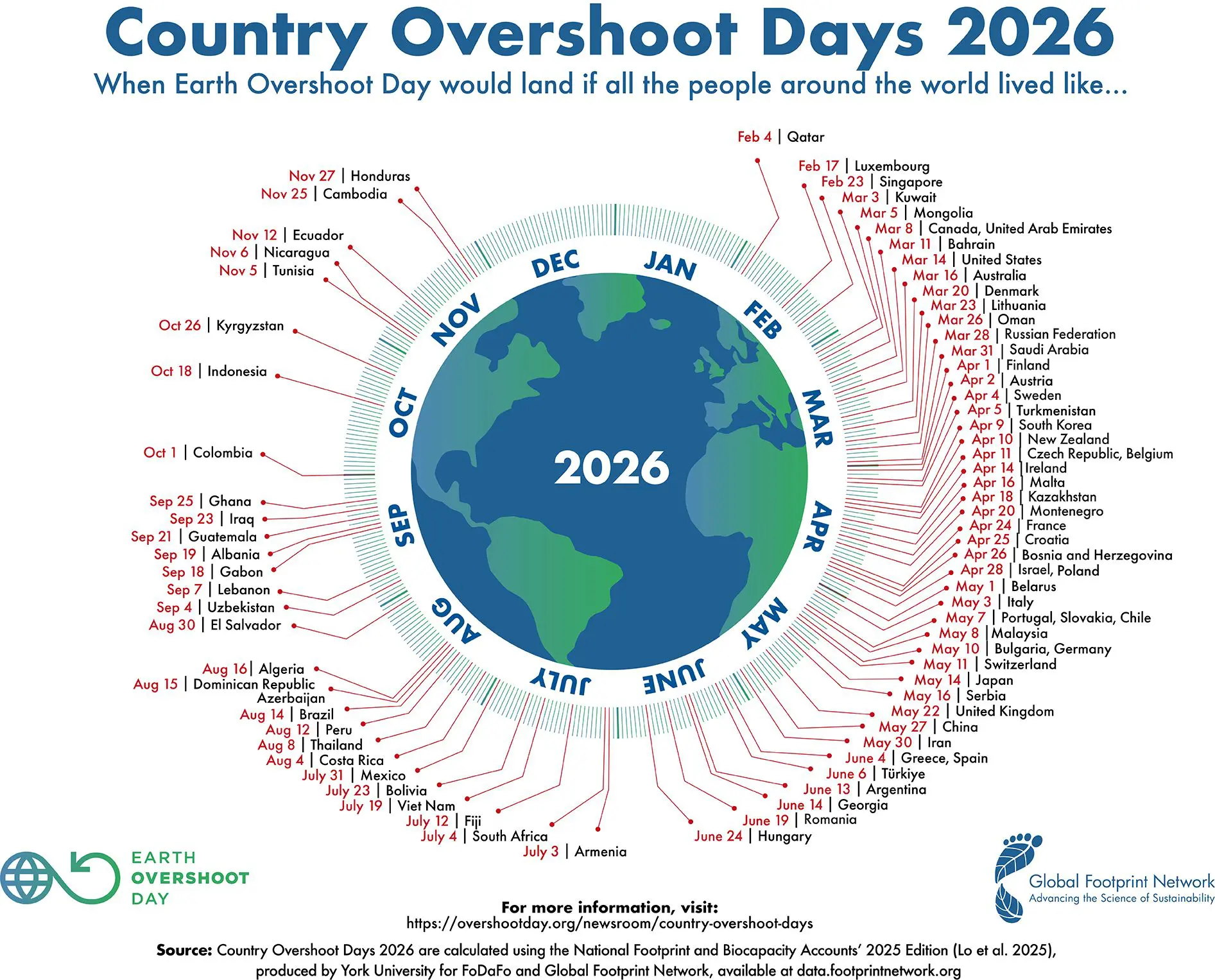
For the United States, that date falls on March 14, 2026. In other words, if everyone lived as Americans do today, humanity would exhaust Earth's annual ecological budget by mid-March. By comparison, the ultimate goal is to move Earth Overshoot Day to December 31, when humanity would be living within the planet's ecological means.
Negative Population Growth, Inc. believes meaningful progress requires addressing both consumption and population growth. Through voluntary family planning, education, and responsible immigration policies, we can reduce long-term pressure on natural resources while helping to build a more sustainable future.
For more information on NPG's vision for achieving a smaller, truly sustainable U.S. and world population—including the policy changes needed to make that vision a reality—we encourage you to review our Proposed National Population Policy.
Together, we can help move Earth Overshoot Day closer to where it belongs: December 31.