
Wildfires, Smog, and the Growing Strain on Public Health
- NPG
- June 9, 2026
- NPG Commentary
- 1 Comments
Smoke and Ozone Pollution Force Residents Indoors as Environmental Pressures Intensify
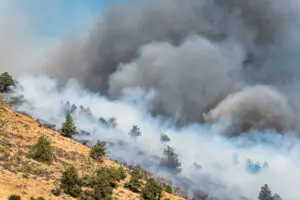
As wildfire season intensifies across parts of the United States, millions of Americans are once again facing the environmental and public health consequences of worsening air pollution. In recent years, wildfire smoke, extreme heat, and stagnant atmospheric conditions have increasingly combined to create hazardous air quality events affecting both urban and rural communities. Officials in several states are now warning residents to limit outdoor activity and remain indoors as dangerous conditions spread across heavily populated regions.
According to a May 20 article published by Newsweek, large portions of Southern California — including Los Angeles, Riverside, and San Bernardino counties — were placed under air quality alerts because of fine particle pollution (PM2.5) generated by ongoing wildfires. The article notes that the Sandy, Bain, and Verona fires continued burning across the region, producing thick smoke that spread into densely populated communities. Thousands of residents were forced to evacuate as the fires rapidly expanded, with some individual incidents reportedly displacing tens of thousands of people. Officials warned that smoke exposure could pose serious health risks, particularly for sensitive groups such as children, older adults, and individuals with respiratory conditions.
The article also highlighted a separate air quality emergency unfolding in North Carolina. A Code Orange Air Quality Action Day was issued across several counties in the state’s Triad region due to elevated ground-level ozone pollution. Unlike wildfire smoke, ozone forms when sunlight reacts with pollutants from vehicles, industrial emissions, and power plants — especially during periods of high heat and stagnant weather. The warning covered multiple counties, including Forsyth, Guilford, Alamance, Davidson, Randolph, and others, with officials cautioning that pollution levels could become unhealthy for sensitive groups.
These events underscore the growing environmental pressures associated with continued population growth, expanding development, and rising resource consumption. As more people move to fire-prone regions and densely developed metropolitan areas, larger populations become vulnerable to wildfire smoke, ozone pollution, evacuation crises, and strain on public infrastructure. Population growth also contributes to increased land conversion, vehicle emissions, energy demand, and development in environmentally sensitive areas — all of which can intensify the conditions that worsen air pollution and wildfire risk. NPG maintains that long-term sustainability requires greater public awareness of how continued population growth affects environmental resilience, public health, and the nation’s ability to adapt to increasingly severe ecological challenges.