Water Crisis in the West: One Community’s Rise to Face Water Challenges
- NPG
- July 16, 2021
- NPG Commentary
- 7 Comments
The Effects of Summer’s Relentless Drought in Healdsburg, California
In California, in the middle of wine country, there is a city named Healdsburg. With a population of 11,845, this Sonoma County community has taken new measures to ensure responsible, sustainable usage of the area’s extremely limited water supply.
In a statement released by the city, they explain the urgency of the new restrictions, noting: “Due to the exceptional drought and significant loss of water rights, Healdsburg's City Council implemented new water restrictions to preserve our water supply through the remainder of the dry season.”
Mandatory water restrictions went into effect Saturday, June 12th. Those restrictions include: 74 gallons of water per day per resident, commercial water use reduced by 40%, turn off automated irrigation for all industrial, commercial, and residential customers, and fines for up to $1,000 per day for violations.
Speaking in basic terms to the purpose of the new restrictions, Healdsburg conservation analyst Felicia Smith said: “Our end goal is to insure [sic] that we have adequate drinking water and are able to flush our toilets come October and November…”
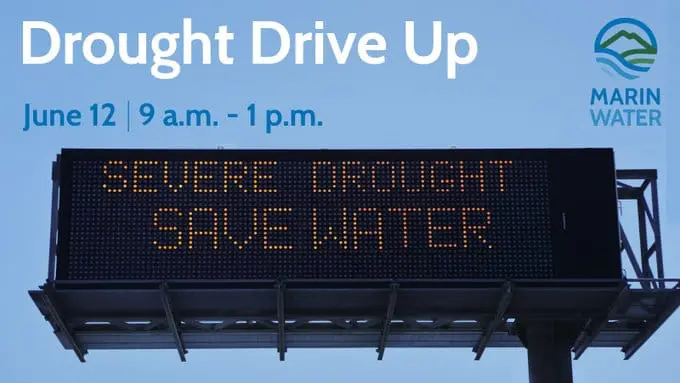
Another measure, taken by water agencies in Sonoma County (and neighboring Marin and Mendocino counties), was the “Drought Drive-By” campaign, hosted at various locations in each county on June 12th. Residents of these communities were invited to stop at their local Drought Drive-By location to pick up a free water-saving toolkit, which included:
- Bucket to catch water for reuse
- WaterSense labeled low flow showerhead
- 5-minute shower timer
- WaterSense labeled low flow faucet aerator
- Toilet dye test tablets
- Self-closing garden hose nozzle
Extreme measures such as these are not to be discounted. This real-life scenario – playing out in California wine country – could be used to describe countless other communities in the western half of the United States. They are a clear, unmistakable sign that a significant portion of this country is in trouble because of climate change. So much so that one outlet recently suggested, “we can’t call these climatic conditions a drought anymore, because that implies it will end. Years are variable, and snowpack, rainfall, and temperatures oscillate, but we have to look at the science and assume that the hot, dry trends we’re seeing will continue—and continue to get worse.”
A June article published by Outside magazine sums up the alarming cascading effects of the drought nationwide, saying: “By June 1st, snowpack in the Sierra Nevada was at zero percent of its average, and California’s governor had declared a drought emergency in two-thirds of the state’s counties. After a record-breaking fire year in 2020, wildfire risks were already high, and the state’s agriculture industry, which supplies a huge amount of the country’s veggies, fruits, and nuts, was facing shortages and cutting crops to compensate. In Oregon, fragile, threatened salmon are dying because streams and lakes are drying up. Wide swaths of northern New England and the upper Midwest are abnormally dry. Even Hawaii is at elevated risk for wildfires.”
With summer in full swing, weather patterns are pointing to yet another season of extreme weather. A June 17th article from the Washington Post details what has happened so far: “One of the most extreme heat waves ever observed in the western United States this early in the season is near its climax. The punishing blast of heat, which began Sunday, has set hundreds of records while simultaneously worsening a historically severe drought, intensifying fires and degrading air quality. About 40 million Americans have endured triple-digit heat and more than 50 million have been under excessive-heat warnings this week.”
With our environment in such a critical state, it is crucial to be aware of (and follow!) local regulations and suggested safeguards. It is also imperative that we embrace environmental stewardship by seeking to know more about the issue, talking with everyone about these historically relevant weather patterns, and showing up to public hearings hosted to discuss concerns and new procedures with local leadership.
 NPG’s Activists’ Guide to Protecting America’s Future features a variety of ways for anyone to use their voice at the grassroots level to engage and inspire others to move together towards a more environmentally sustainable way of life – where our everyday eco-systems are valued and protected.
 For readers looking to share information with the next generation, we invite you to check out NPG’s Student Guide to Serving as an Environmental Activist, created specifically for middle and high school students.