World Water Day 2022
-
NPG
-
March 21, 2022
-
NPG Commentary
-
0 Comments
“World Water Day is on the 22nd of March every year. It is an annual United Nations Observance, started in 1993, that celebrates water and raises awareness of the 2 billion people currently living without access to safe water. A core focus of World Water Day is to inspire action towards Sustainable Development Goal (SDG) 6: water and sanitation for all by 2030.” – www.worldwaterday.org
Continue Reading
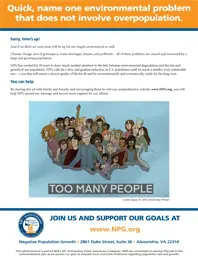
Quick, name one environmental problem that does not involve overpopulation
-
NPG
-
March 21, 2022
-
Advertisements
-
0 Comments
This ad appeared in the Washington Times Weekly on March 21st, 2022.
Continue Reading
Experts Caution Rising Sea Levels Along Coastal U.S. Will Be Problematic
-
NPG
-
March 15, 2022
-
NPG Commentary
-
0 Comments
Worldwide, we know the earth is getting warmer. Nationally, we know that the western states are overwhelmed with wildfires every year. A recent study published by The Conversation shows that the areas experiencing the most population growth are also the same areas where the (dry) vegetation creates the highest fire risks.
Continue Reading
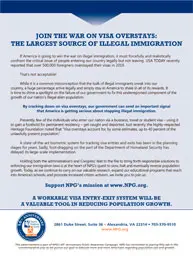
JOIN THE WAR ON VISA OVERSTAYS: THE LARGEST SOURCE OF ILLEGAL IMMIGRATION
-
NPG
-
March 14, 2022
-
Advertisements
-
0 Comments
This ad appeared in the Washington Times Weekly on March 14th, 2022.
Continue Reading
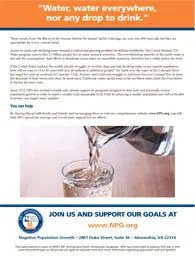
“Water, water everywhere, nor any drop to drink.”
-
NPG
-
March 7, 2022
-
Advertisements
-
0 Comments
This ad appeared in the Washington Times Weekly on March 7th, 2022.
Continue Reading
The Cost of Expansion into Fragile Ecosystems Creates an Increased Risk of Wildfires in Vulnerable Areas
-
NPG
-
March 1, 2022
-
NPG Commentary
-
1 Comments
Worldwide, we know the earth is getting warmer. Nationally, we know that the western states are overwhelmed with wildfires every year. A recent study published by The Conversation shows that the areas experiencing the most population growth are also the same areas where the (dry) vegetation creates the highest fire risks.
Continue Reading
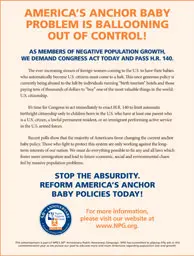
AMERICA’S ANCHOR BABY PROBLEM IS BALLOONING OUT OF CONTROL!
-
NPG
-
February 28, 2022
-
Advertisements
-
0 Comments
This ad appeared in the Washington Times Weekly on February 28th, 2022.
Continue Reading
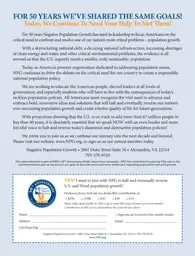
FOR 50 YEARS WE’VE SHARED THE SAME GOALS!
-
NPG
-
February 21, 2022
-
Advertisements
-
0 Comments
This ad appeared in the Washington Times Weekly on February 21st, 2022.
Continue Reading
New NPG Forum Paper Discusses the Trajectory of Population Growth
-
NPG
-
February 15, 2022
-
Press Releases
-
0 Comments
Negative Population Growth has published a new paper to their Forum series: Will 2022 Be the First Year of U.S. Negative Population Growth? Written by Nathanial Gronewold, this paper discusses the potential trajectory of population growth in the U.S. during this time of historically low birth rates and a global pandemic, positing: “U.S. population growth could be dragged lower or even turn negative in 2022 as America begins Year Three of the COVID-19 pandemic.” Beginning with the basics, Gronewold presents two s
Continue Reading
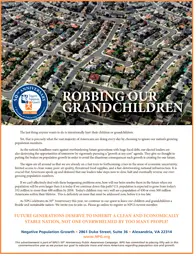
ROBBING OUR GRANDCHILDREN
-
NPG
-
February 14, 2022
-
Advertisements
-
0 Comments
This ad appeared in the Washing Times Weekly on February 14th, 2022.
Continue Reading