
Delaware State Profile
- NPG
- July 6, 2026
- State Profile Series
- 0 Comments
Delaware is a small but significant state on the Atlantic coast. It was the first state to be admitted to the Union and by the time all fifty states became a part of the U.S.A., Delaware took its spot as the second smallest. Only Rhode Island is smaller. In an alarming contrast, the Blue Hen State lands at number six (of fifty) on the list of most densely populated states. Population density is problematic because it leads to overdemanding of both natural resources and infrastructure. There is an average of 529 people per square mile in the state known as the corporate capital of the world. In its most populated county, New Castle, population density is twice that average at 1,374 peopleer square mile.
There are 1,059,552 people estimated to live in the Diamond State today which has only 2,489 square miles within its borders, including 539 square miles of water. That leaves only about 1,950 square miles of actual land that can be occupied. To grasp its size and compare land area statistics, 300 Delawares could fit into Alaska, which has an average populationensity of 1.3 people per square mile.
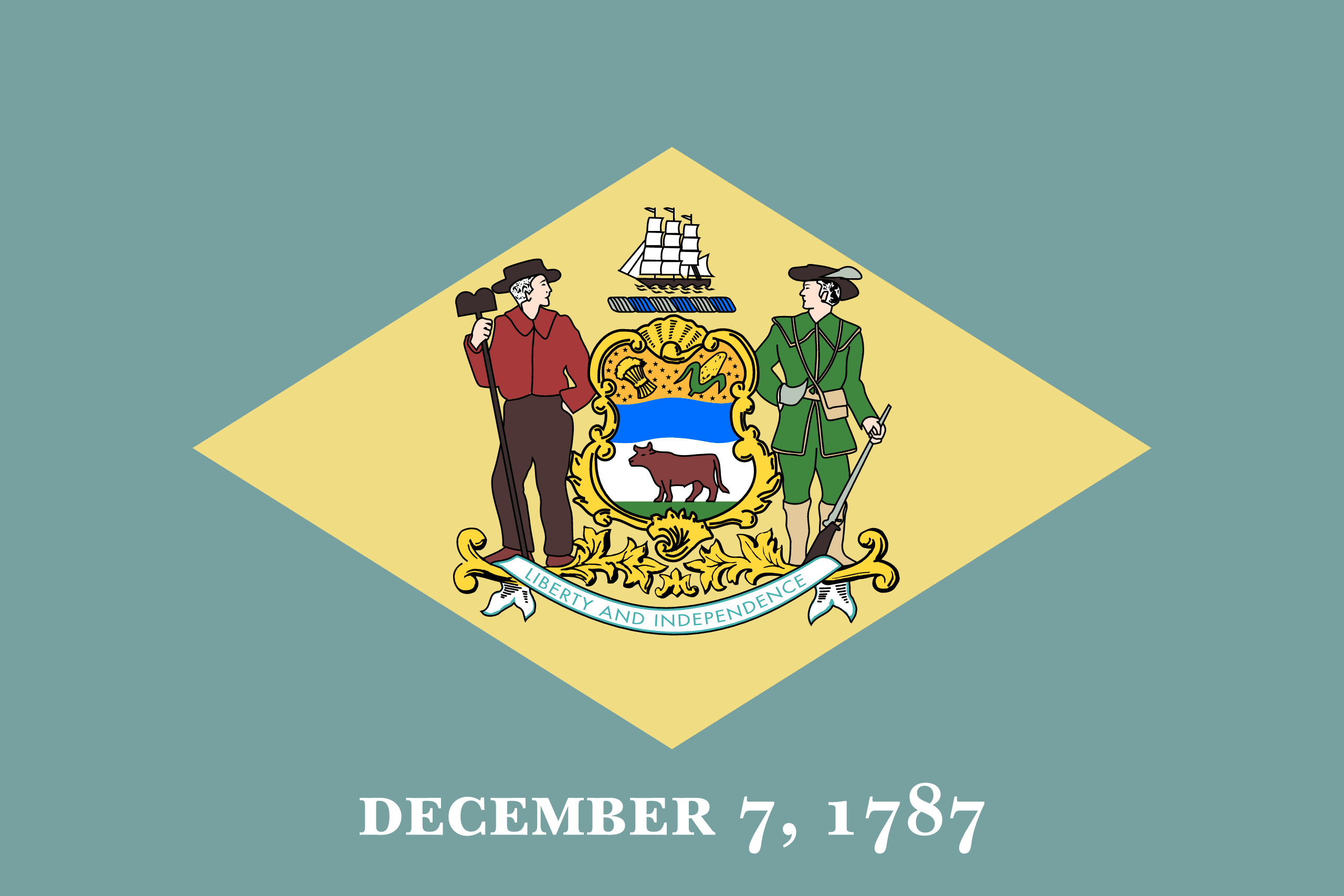
Delaware’s history begins at our country’s inception. It was the first state to ratify the Constitution on December 17, 1787. Prior to that, it was home to the Lenni-Lenape tribes; the Nanticoke occupied the southern part of the state. The first Europeans to conquer the area were the Dutch, followed by the Swedes and then the British. In its early history, the first census of 1790 estimated that there were 60,000 inhabitants. By the year 2000, its population had risen to just over 783,000. Since then, Delaware's population has grown to more than one million residents.
Delaware’s growth is largely due to four main factors: its location on the popular eastern seaboard; it mirrored US population growth in the baby boom post WWII era; its favorable tax environment; and its reputation as an immigrant-friendly state.
It has the reputation of being such a business-friendly state that over 1.9 million companies are incorporated there. Among the laws which attract so many companies are the fact that there is no state sales tax; Delaware has no state corporate income tax; and there is a low and flexible franchise tax for corporations.1
Delaware is considered to be an immigrant-friendly state because it offers legal protections to residents regardless of their immigration status and it does not fully cooperate with federal officials attempting to apprehend illegal aliens. It is one of eleven states on the U.S. Sanctuary Jurisdiction List, from the US Department of Justice.
“The agency cited nine characteristics shared by states and cities receiving the designation, including the following:
- Laws, ordinances, and policies obstructing or limiting local law enforcement cooperation with U.S. Immigration and Customs Enforcement (ICE).
- Limiting local police agencies’ ability to share information about the immigration status of detainees with federal authorities.
- Jurisdictions that refuse to honor ICE detainer requests.
- Jurisdictions that circumvent federal laws prohibiting the provision of federal benefits to unauthorized immigrants.”2
Immigrants make up just over 15% of its workforce. About one out of every nine people in Delaware is an immigrant. As further evidence of its immigrant friendly climate, Delaware is embroiled in legal battles with the Trump Administration over releasing illegal immigration records. Delaware officials claim that these efforts are examples of unscrupulous “naked racial profiling.”3
UNTETHERED DEVELOPERS: GROWTH ENABLERS
Under its pro-growth economic climate, developers frequently swoop in and have their sights set on making a profit by investing in rapid gentrification, resulting in the demolition of local housing and the displacement of small businesses. They then flip properties which inflates housing costs and creates high, unaffordable rental costs. The first friends of developers are those with rezoning power. The courts often have the last word, and in this development-friendly state, the land use ordinances are typically in favor of the developers. The first step in redevelopment is to change local policy to acknowledge the state’s changing landscape and needs.
These developers, often from other states, take advantage of tax incentives, then take their money and run, leaving local authorities holding the bag of extra traffic, increasing poverty and homelessness, and diminishing local economies. In business-friendly states these corporations do not have to face legal actions for the disruption they cause. Growth of housing increases pressure to expand freeways, and those freeways themselves destroy communities. When development to build housing destroys natural areas, the damage is not only to nature but to the way the land naturally protects areas from flooding. The struggle to protect Delaware from the damage of growth is often monumental.
Population growth leads to sprawl. This is problematic in Delaware’s rural areas as well as in suburbia. In rural areas, precious farmland often adjacent to wildlife protected areas is bulldozed to accommodate the desire for low-density housing. In suburbia, strain is put on local water resources and roadways, as developers and politicians call for more schools, hospitals, and shopping centers. Increased car usage leads to higher air pollution and rising health care costs as well.4
“The more natural areas that we lose, the more expensive it becomes to protect them, and the higher the price of infrastructure solutions,” argues Mark Nardone, director of advocacy for Delaware Nature Society and former editor of Delaware Today. Nardone went on to say: “If we destroy a marsh that has protected the nearby built environment from flooding, for example, we then need to build expensive infrastructure to manage stormwater.”5
TRAFFIC JAMS ON THE INCREASE
Booming population growth combined with slow-to-respond infrastructure and increased tourism have turned the small state into one big traffic mess. Bottlenecks, construction, and accidents all contribute to this unwieldy problem. Rear-end collisions are the most common, a result of heavy traffic on its major freeways. Delaware County has been accused of allowing expansion without providing additional necessary infrastructure, further contributing to traffic issues.
WATER, WATER, EVERYWHERE, BUT NOT A DROP TO DRINK?
Much of the state is dependent on groundwater. Recent drought conditions have led the governor to declare a drought watch. Along with burning bans, citizens are being asked to reduce their water use. Climate change means unreliable rains will shorten water supplies in the future.6
Northern Delaware relies heavily on streams and reservoirs, which is why climate change has made it so vulnerable to dry spells. Central and Southern Delaware depend on groundwater, which faces long-term scarcity issues due to depletion from increasing agricultural and residential demand during hot summers. Because it is the lowest lying state in the country, the groundwater is vulnerable to saltwater intrusion.
WILDLIFE UNDER THREAT
Even with its high population density, crowds and traffic, Delaware still has some beautiful wildlife conservation areas. These include the Bombay Hook National Wildlife Refuge, which protects migrating snow geese and shorebirds in its tidal salt marshes, and the Prime Hook National Wildlife Refuge known for its annual Horseshoe Crab and Shorebird Festival. State Wildlife areas such as Little Creek and Augustine are also very important to conservation efforts. They are all involved in protecting the eighty-six species on the state’s endangered species list and the fourteen on the federal endangered species list. The list includes terrestrial, river, and ocean species. The threats come from habitat loss caused by commercial and residential development, pollutants, and destruction from heavier storms due to climate change.
BIG AG IN A SMALL STATE
Delaware is a flat state, with a humid subtropical and temperate climate and a growing season which allows for harvesting of up to three crops a year. It is ideal for agriculture. More than 2,300 families use 40% of Delaware’s land for production of soybeans, lima beans, sweet corn, and potatoes. It is also known for its large poultry operations.7 Pressure to accommodate population growth threatens farmland nationwide. Delaware’s farmland is no exception to this looming threat. If growth trends continue up to 65,100 acres could be bulldozed by 2040.
CONCLUSION
A group called Rethinking Delaware is concerned that sixty different government agencies are making land use decisions in a piecemeal fashion. They believe this system longer workable considering the state has grown by 60% since it was first established. The organization has observed that: “Decades of piecemeal land use decisions have made us totally dependent on our personal motor vehicles. That dependence has cost us a great deal. It has compromised our health; created a shortage of diverse and affordable housing; gobbled up open space, farmland, forests, and wetlands; increased pollution; escalated the public costs of infrastructure and services; driven climate change; and eroded the sense of place and quality of life that makes strong communities.”
Their goal is to coordinate the planning for smarter, more compact growth, deterring long commutes and emphasizing livable neighborhoods.8
Unfortunately, there isn’t room to handle more growth, no matter how smart, in this small state. Reforming land use strategies is needed and admirable, but it can’t eliminate Delaware’s overpopulation problems which are exacerbated by growth. To try to accommodate more growth is to encourage more impervious surfaces which contribute to run-off and water pollution negatively impacting fisheries and water supplies.
For all these reasons, Delaware needs to put the brakes on population growth. As the late professor of physics from the University of Colorado at Boulder, Dr. Al Bartlett once said: “Smart growth destroys the environment. Dumb growth destroys the environment. The only difference is that smart growth does it with good taste.”
NOTES:
- https://www.oneibc.com/en-us/insights/tax-benefits-of-delaware
- https://delawarelive.com/is-delaware-moving-toward-being-an-immigration-sanctuary-state/
- https://whyy.org/articles/delaware-illegal-immigration-wage-records-appeal/
- https://library.weconservepa.org/guides/96-economic-benefits-of-smart-growth-and-costs-of-sprawl
- https://delawaretoday.com/life-style/sussex-county-growth/
- https://news.delaware.gov/2026/06/03/governor-meyer-declares-statewide-drought-watch/
- https://www.choosedelaware.com/key-industries/agribusiness-companies
- https://delawarenaturesociety.org/rethinking-delaware-land-use-is-key-to-many-issues/