
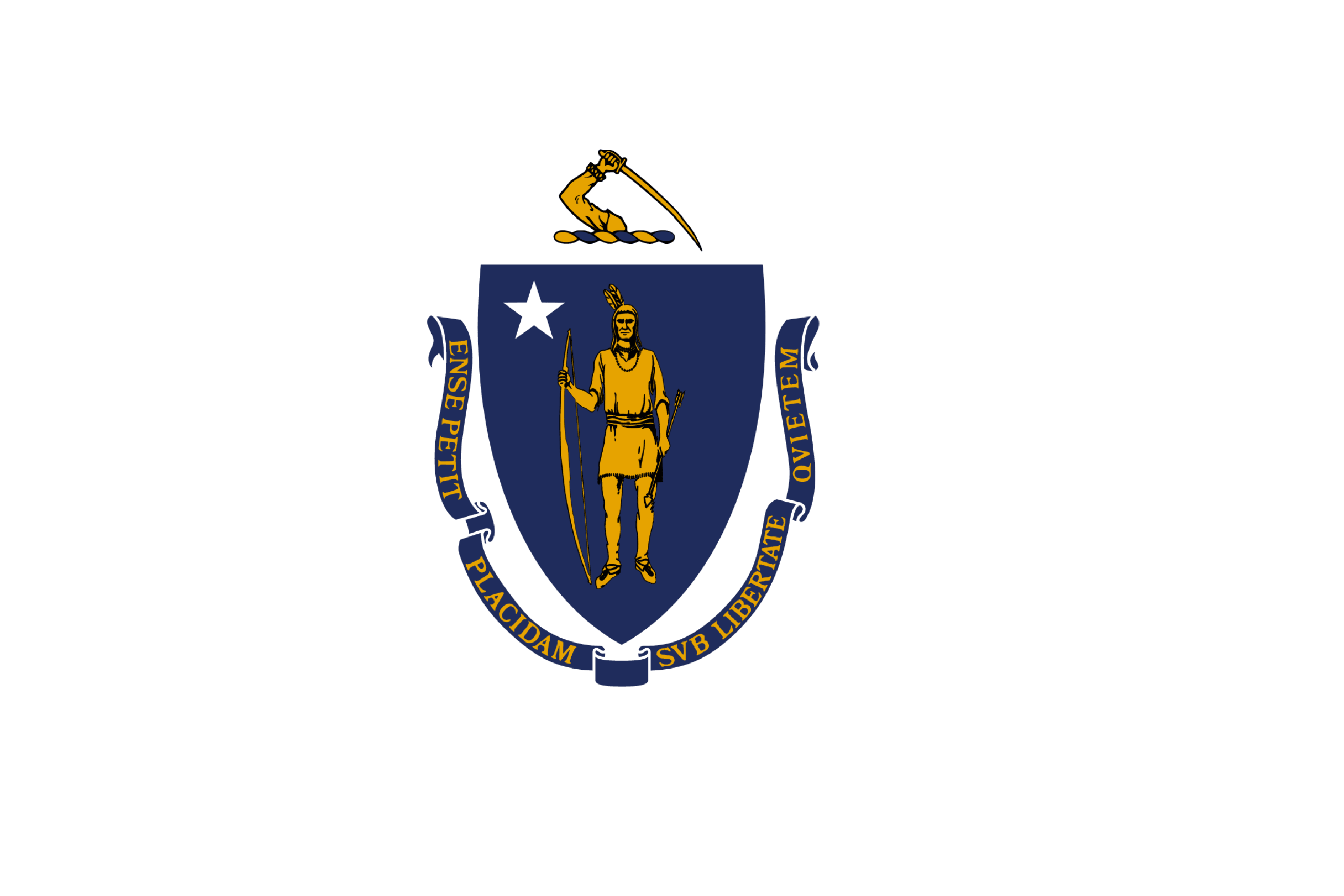
Massachusetts State Profile
- NPG
- September 12, 2025
- State Profile Series
- 0 Comments
 It is safe to say that our nation may not exist without the many relevant events and people from the relatively small state of Massachusetts. Its significance is revealed by how many famous names lace our history books and line our library shelves. As the 6th state to enter the union, Massachusetts can claim the likes of John Adams, John Hancock, and Samuel Adams from American government and Ralph Waldo Emerson, Henry David Thoreau and Nathanial Hawthorne from literature. The history of this state runs deep. It was one of the original 13 colonies and one of the first English settlements. Massachusetts was also home to Paul Revere and Crispus Attucks: both men played significant roles in the American Revolution. Notably, Crispus Attucks, who was the first to die in the Boston Massacre, later became a symbol of the abolitionist movement as a man of African and native descent. Throughout the centuries, it can boast of a continuing political legacy because the Kennedy family has its roots there. It certainly is a state to value and preserve.
To compare its size, if Massachusetts was a pie, and California was a bakery, 15 pies would fit inside. There are only 6 states smaller. In spite of its small size, one can visit 150 state parks, 38 state forests, 4 national wildlife refuges and 3 national historic sites without leaving the state. It is also known for contributing to our educational prowess by being home to some famous universities such as Harvard, Tufts and Brandeis among the other 80 colleges and universities in this east coast state.
The combination of its small size and historical significance means that paying attention to its growth is of extreme importance. Growth of population within its 10,555 square miles means greater pressure on both its infrastructure and natural resources. More people equal more pollution, more traffic will clog roadways, and as more people drive over its 8,000 bridges, they will have to be replaced more often.
Water is Our Most Precious Resource
No state in a climate change world has an inexhaustible supply of water. Drought conditions have hit even Massachusetts which means less recharge of aquifers and less rain filling its rivers which flow into its reservoirs. With a current average of 42-45 inches of rainfall each year, the pressures from continued growth and development help to increase the amount of cement covering water-absorbing soil, thereby sending run-off into the ocean instead of its aquifers and reservoirs.
Massachusetts is experiencing what is referred to as ‘climate whiplash’, which means both extremes of rain and drought are now more common in the course of a year.1
Climate change is altering weather patterns which has meant warmer and drier conditions in the fall and winter. Massachusetts has seen a notable increase in drought conditions, with some years experiencing drought for the majority of the year. The severity of drought is increasing. The years 2020 and 2021 were particularly dry, and 2020 saw the driest fall in 50 years.
While not a huge agricultural state, Massachusetts farms are known for their cranberry production, second only to Wisconsin. This crop requires a huge amount of water, primarily for irrigation and frost protection. In times of drought, competition for water grows between municipal needs and agricultural needs.
Growth is the Enemy of Preservation
Any increases in population exacerbate the drought situation. So, is Massachusetts gaining population? The sobering answer is “YES”! On December 19, 2024, the U.S. Census Bureau released annual population estimates for U.S. States and Puerto Rico for July 1, 2024. According to the release of the U.S. Census Bureau’s annual statistics, Massachusetts’ population increased from 7,066,568 to 7,136,171 from July 1, 2023, to the following year at the same time. This represents an increase of 69,603 consumers of water, drivers of cars, and users of all resources. The addition of 69,603 new faces represents a percentage increase of just under 1%, but it is growth the state cannot afford.2
Math Matters
As a culture, we are mathematically illiterate, and this is particularly evident in the lack of awareness of knowing our own state’s population numbers.3
Why do these numbers matter? I once took an informal survey of lifelong Florida residents to see how many knew their own state’s population. All I got was puzzled looks. I don’t think the results would be different today, no matter who I surveyed in all of our 50 states. If we are going to be able to solve a problem, it goes without saying that we need to realize that there is a problem to be solved. Those who live in Massachusetts are proud residents likely to want to preserve the integrity of their state. Yet to keep crowds within reason and to preserve their quality of life, population numbers matter. The borders of Massachusetts have remained the same since they were legally finalized in 1910. There are limits to growth and when we exceed those limits there are dire consequences, yet Massachusetts keeps on growing. The numbers that should send shivers down the spines of its residents and leaders can be summarized into one statistic: the state of Massachusetts ranks as the 16th highest in population, but ranks as 44th when measuring the largest to the smallest size states. This translates to a population density of nearly 900 people per square mile, which is the 3rd highest in the nation.
This is very unfortunate for how can we know the dangers we face with growing numbers if we do not have the most basic facts of population in our memory banks? It is fair to assume that most of those who call Boston and outlying areas home can name the state’s teams as the Boston Red Sox, the Boston Celtics, the New England Patriots and the Boston Bruins. School children are taught that the state’s bird is the black-capped chickadee, and its flower is the Mayflower. But how many adults can recall the total population of their state, especially as it relates to when they were kids? There are dozens of media outlets which broadcast sports, it would be hard not to know the teams’ names even if you weren’t a fan. The logical place where Bay Staters might access population numbers would be on the websites of its 1,153 environmental groups. I visited some of their websites and found no reference to population. “Environment America” is just one example of this glaring absence. It wants its members to save the bees and protect the EPA, but it makes no mention of how increasing population is behind so much environmental damage they claim they wish to protect.4
If people were made aware of how overpopulated Massachusetts already is, overshooting both its natural resources and infrastructure, they would be much more willing to support policies that restrict growth. Instead, too many are getting behind the attention being given to the tale that losing population is a bad thing. It will take some readjusting of how we allocate our resources, but population decline should be a cause for celebration. The only people who temporarily benefit from growth are developers, represented by corporations that secure the contracts for building more roads, schools and housing. The losers are those who must breathe more polluted air, suffer in more traffic, and experience shortages of open space and more.
Painting a Truer Picture of Growth
Massachusetts is not alone in the way it is pushing growth on its citizens. The entire country and indeed the globalized world have long been enraptured with the money associated with more construction, more capital and more people. Turning the love of growth around must start with the coverage in the news and in our environmental stories about the downsides of growth. Showing that there are many more negatives than positives to growth is a great place to start.
NIMBY is an acronym for Not In My Backyard, referring to the mentality of neighborhood associations (like HOAs) and individual activists who do not want any number of things next to them, from homeless shelters to garbage burners. Studying the effects of local problems with growth should be exactly that, with the acronym INBY: It’s already in your backyard! It needs to be made clear that growth is making almost everything people care about worse. Reports on the statistics of air pollution, traffic jams, loss of wildlife, etc. must be connected directly to population growth and how it inflames these problems.
Air Pollution in the Home State of John Adams
Air pollution is not a modern phenomenon. The US started mining coal in the 1740s and its usage became a major source of pollution as the country was forming.5
Still, polluted air is a public health concern and an all-inclusive detriment to society. It is especially harmful to the very young, affecting IQ, low birth rates, and pediatric asthma. It also contributes to higher cancer rates, heart disease, and stroke in older people. Pollution comes from stationary sources: fossil fuel-based industry, home heating and air conditioning and mobile transportation sources. A study done by Boston College focusing on Massachusetts found that the silent killer of polluted air is responsible for 2,780 annual deaths as well as lowered IQ in children who live there.6
Having higher emission standards is important but so is having fewer people driving cars and demanding energy, since 95% of the pollution in Massachusetts is from the burning of fossil fuels.
The Human Toll of Traffic
In spite of a nationwide downturn in traffic accidents, they are increasing in the Bay State. According to the National Highway Safety Administration (NHSA), there has been a 7.3 percent increase in traffic deaths from 2023 to 2024. NHSA even blames the additional 368 deaths on an increase in the number of drivers in addition to the uptick in negative behaviors of drinking while driving as well as distracted drivers.7
Even if additional cars were all electric in an effort to improve air quality, the additional cars add to the chance of more traffic accidents and the annoyance of traffic jams.
Supply and Demand and the High Cost of Living
According to Boston.com, Massachusetts ranks second in highest cost of living in the country. Rental costs of over $1,800 a month is just one indication of how expensive it is to live there.8
When the cost of living is already high in a small state increased demand fueled by a growing population will drive prices even higher. When prices are high, the working class and middle class will feel the squeeze and suffer disproportionately compared to the wealthier classes. Those concerned about social justice and equity need to examine the negative side of growth in a state with over 7 million people, with everyone wanting access to housing, health care, high-quality food, and education.
Population is a Home-Grown Issue
The force behind growth in many states including Massachusetts is no longer the fertility rate. With one of the lowest fertility rates in the US, the growth of population in Massachusetts is attributed to immigration. When looking at the big picture, the small state ofassachusetts could certainly use a break from growth. Instead, 90,000 immigrants arrived in 2024. Laws governing immigration need not be draconian nor require mounds of paperwork. They do however need a deep rethinking through the lens of sustainability. Massachusetts is already home to 7 million people. Policy makers and voters must question the ideal number of those who can comfortably live in the state. That needs to be the litmus test of polices that either encourage or discourage growth.
Perhaps it would help to look at this rectangular ocean-bordering state as a Boston Cream Pie. As delicious as it may look covered in whipped cream and sitting atop of vanilla custard and sponge cake, we know that there is only so much to go around. While we might be math illiterate, we are hopefully not ‘pie illiterate’ and can understand the wakeup call this limit needs to invoke.
- https://www.rmets.org/metmatters/climate-whiplash
- https://donahue.umass.edu/business-groups/economic-public-policy-research/massachusetts-population-estimates-program/population-estimates-by-massachusetts-geography/by-state
- https://digitalcommons.georgiasouthern.edu/cgi/viewcontent.cgi?article=2680&context=etd
- https://environmentamerica.org/massachusetts/
- https://www.eia.gov/kids/history-of-energy/timelines/coal.php#:~:text=The%20first%20commercial%20U.S.%20coal,Pennsylvania's%20anthracite%20deposits%20were%20found
- https://www.bc.edu/bc-web/bcnews/science-tech-and-health/earth-environment-and-sustainability/massachusetts-air-pollution-deadly-toll.html
- https://www.wwlp.com/news/massachusetts/deadly-traffic-incidents-rise-in-massachusetts-despite-national-improvement/
- https://www.boston.com/real-estate/real-estate/2024/07/16/massachusetts-ranked-2nd-highest-cost-living/